
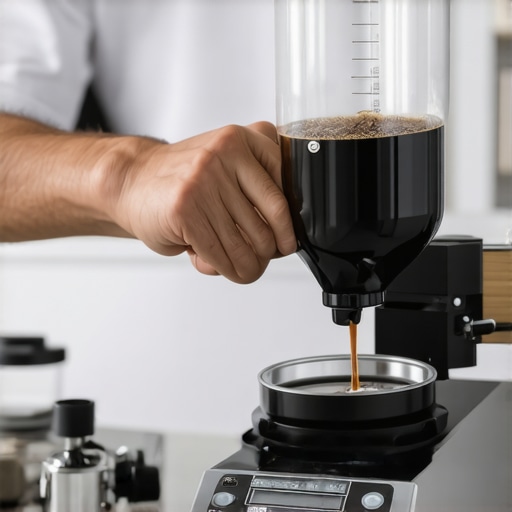
Digital scale drift is the silent saboteur of the perfect espresso shot. You set your portafilter down, tare it, and watch as the numbers begin to climb or descend without any weight being added. It is frustrating. It is expensive when you consider the cost of specialty beans. In my fifteen years of optimizing luxury kitchen workflows, I have seen professional-grade equipment rendered useless by simple environmental interference. If your 18-gram dose is actually 18.4 grams due to a drifting sensor, your extraction timing is dead on arrival. The result? Avoidable failure.
How to Fix the Drift on Your Digital Coffee Scales
Fixing drift requires understanding that a digital scale is essentially a voltmeter measuring the resistance change in a load cell. This load cell is a piece of metal with a strain gauge attached. When weight is applied, the metal bends slightly, changing the electrical resistance. Anything that interferes with that electrical signal or the physical movement of the metal causes drift. The first step is isolating the power source. Cheap or dying batteries are the primary cause of signal instability. If you are using a rechargeable scale, ensuring a full charge often stabilizes the voltage regulator. If the drift persists, we look at the environment.
The Heat and Vibration Tax
Luxury kitchens are dense with thermal energy. Placing a sensitive digital scale on top of an espresso machine is a common mistake. The heat from the boiler causes the metal in the load cell to expand, altering the resistance and causing the numbers to crawl. I once diagnosed a scale that drifted every time the steam wand was engaged; the ambient humidity and heat were simply too much for its unshielded internals. Move the scale to a cool, stable surface. Vibration is another culprit. High-end grinders can create micro-vibrations that a sensitive scale interprets as weight flux. If you are tackling why your high-end coffee grinder is clumping every morning, ensure your scale is not sitting on the same countertop as the motor during the dosing process.
Electromagnetic Interference and Static
We are living in an era of wireless signals and induction technology. Digital scales are susceptible to Electromagnetic Interference (EMI). If your scale is near a microwave or a high-end induction range, the electrical fields can induce a current in the load cell wires. This is often the same invisible force that explains why your induction cooktop is making a high-pitched whining noise. Furthermore, static electricity can be a nightmare. In dry environments, static buildup on the plastic casing of the scale can pull on the weighing platform. Using a slightly damp cloth to wipe the exterior or addressing the grinder static problem and the rdt water drop solution can often neutralize these phantom forces.
[image_placeholder]
The Calibration Protocol
If environmental fixes fail, the sensor needs a reset. This is the Calibration Protocol. Most high-end scales require a specific weight (usually 100g, 500g, or 2kg) to recalibrate the software’s understanding of zero and maximum capacity. Use a certified calibration weight, not a nickel or a bag of beans. According to the National Institute of Standards and Technology (NIST), even minor deviations in reference weights can lead to significant errors in precision instruments over time. To calibrate, enter the scale’s calibration mode—usually by holding the ‘Mode’ or ‘Unit’ button—and follow the prompts. This re-aligns the digital output with the physical reality of the load cell’s strain.
The Macro View
The industry is moving toward gravimetric integration. We are seeing a shift where the scale is no longer a separate tool but is built directly into the drip tray of the espresso machine, hardwired to the control board. This reduces EMI and provides better thermal shielding. Within the next 24 months, expect to see more scales utilizing optical sensors or piezoelectric pressure pads that are less sensitive to the atmospheric changes that plague current strain-gauge technology. Regulatory changes regarding the precision of consumer electronics may also force manufacturers to improve the shielding in entry-level models.
The Executive Verdict
If your scale is drifting, do not throw it away immediately. First, replace the batteries and move it away from heat sources like the espresso machine boiler. Second, check for airflow; even a nearby air conditioner or open window can cause enough air pressure change to shift a 0.1g reading. Third, perform a formal calibration with a certified weight. If the scale still drifts after these steps, the load cell is likely permanently deformed or the internal circuitry has oxidized. In that situation, invest in a scale with a higher IP (Ingress Protection) rating to prevent moisture from the kitchen from damaging the next unit. If you find your shots are still inconsistent, you might also want to investigate why your espresso pressure gauge never reaches nine bars to ensure the scale is your only variable.
Frequently Asked Questions
Q: Can a breeze really cause scale drift?
A: Yes. High-precision scales are sensitive enough to measure the air pressure from a ceiling fan or HVAC vent. Always use a draft shield or turn off fans when weighing coffee.
Q: Why does my scale display a negative number?
A: This usually happens when the scale is tared with an object on it, and that object is then removed. If it happens spontaneously, it is a sign of extreme drift or a failing load cell.
Q: Is it okay to leave my scale on the drip tray?
A: No. Constant exposure to moisture and heat will eventually corrode the internal electronics and cause the load cell to lose its elastic memory.