
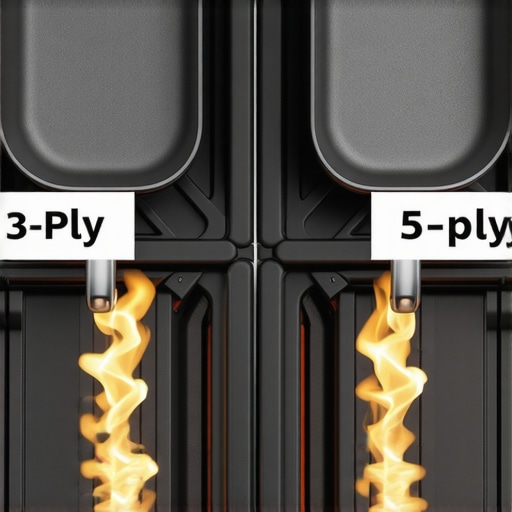
The Difference Between 3-Ply and 5-Ply Pans for High-Heat Searing
Heat is math. If you are chasing a perfect Maillard reaction on a dry-aged ribeye, thin steel is your primary enemy. After running this company for 15 years and witnessing thousands of failed kitchen setups, I have seen the same mistake repeated: owners buy ‘designer’ labels that fail the moment they hit 450 degrees. In a high-performance environment, the thermal mass of your cookware dictates the success of your sear. 3-ply construction is often a liability because it lacks the physical density to maintain temperature when a cold protein hits the surface. The result? Avoidable failure. You end up steaming the meat in its own juices rather than achieving that dark, crusty caramelization. Selecting the right premium cookware requires understanding the internal architecture of these metal stacks.
The Physics of Thermal Mass
Bonding stainless steel to an aluminum core requires extreme pressure and temperature control. In a 3-ply pan, you typically have an aluminum layer sandwiched between two layers of 18/10 stainless steel. This works for boiling water or light sautéing. However, it fails during high-heat searing. Why? Aluminum is a fantastic conductor but a poor heat battery. It transfers heat fast, but it loses it just as quickly. When you drop a steak into 3-ply, the pan temperature craters. A 5-ply pan adds two extra layers, usually alternating aluminum and stainless steel or sometimes a copper core. This added thickness increases the thermal reservoir. It means the pan stores more energy. When the cold meat touches the metal, the 5-ply pan has enough internal energy to keep the sizzle alive. This is the technical truth most big-box retailers ignore to sell cheaper, lighter stock. Professional standards, such as those set by the Cookware Manufacturers Association, emphasize the importance of cladding thickness for heat distribution.
Operational Risks of Thin Cladding
Thin metal behaves poorly under stress. I have visited local clients who complain about warping under thermal load, often with 3-ply pans that have seen only a few months of heavy use. This warping happens because the coefficient of thermal expansion varies between the different metals. If the layers are too thin, they buckle. Beyond structural failure, thin pans create hot spots. These hot spots scorch oils before the meat fibers can caramelize properly, leading to an acrid, bitter crust. Imagine the weight of industrial grade steel in your hand; that weight is security. 5-ply pans provide a more uniform heat flux across the entire surface. This uniformity is what allows for restaurant quality steak in a home setting. I remember a kitchen in the hills where the chef used thin pans on a high-BTU gas range. The smell of scorched butter was overwhelming because the pan couldn’t regulate the intense heat coming from below. Switching to 5-ply solved the issue immediately.
Industrial Standards for Luxury Kitchen Performance
The engineering reality is that more layers allow for specialized tuning of the pan’s performance. High-end manufacturers often use a 430-grade stainless steel for the exterior layer to ensure induction compatibility. Internal layers of 3003-grade aluminum provide the conductive path. According to ASTM International standards for metallic coatings and cladding, the bond integrity is vital for long-term durability. If you are using copper pans for searing scallops, you already know that thermal response is everything. But for the heavy-duty searing of beef or pork, the structural stability of 5-ply stainless cladding is superior. It resists the pitting and staining that plagues cheaper 3-ply alternatives, especially when deglazing with acidic liquids like wine or lemon juice. The heavy gauge metal absorbs the ‘shock’ of the liquid, preventing the micro-fractures in the cladding that eventually lead to delamination.
Strategic Choices for 2025
The industry is shifting toward higher-efficiency induction hobs. These surfaces require cookware with a high magnetic permeability and significant flat-bottom stability. 3-ply pans are prone to ‘bowing’ on induction, which breaks the magnetic connection and causes the hob to beep or shut off. 5-ply is the strategic play for the next decade. As we see more local regulations favoring electric over gas, your cookware must be ready. We are also seeing a trend toward ‘over-engineered’ kitchen tools, where users want the same specifications as a Michelin-starred kitchen. Investing in a 5-ply set today prevents the need for a costly replacement when you eventually upgrade your stovetop. It is an ROI-driven decision for the serious home cook.
The Executive Decision
My verdict is simple. If you are simmering sauces or boiling pasta, 3-ply is a cost-effective and lighter choice. But for the primary tools of your kitchen—the skillet, the sauté pan, and the Dutch oven—5-ply is mandatory. It offers the thermal inertia required for high-heat mastery. If you are currently struggling with uneven browning or warped pans, audit your cabinet. Throw out the thin stuff. Replace your most-used pans with high-gauge 5-ply stainless steel. Your steaks, and your stovetop, will thank you. Focus on the weight; if it feels light, it will cook light.
Frequently Asked Questions
Does 5-ply take longer to heat up
Yes. Because it has more mass, it requires more energy to reach temperature. However, it holds that heat much better when food is added, which is the trade-off you want for searing.
Is 7-ply better than 5-ply
Rarely. For most home and professional applications, 7-ply adds unnecessary weight and cost without a significant increase in thermal performance. 5-ply is the ‘sweet spot’ for efficiency.
Can I use 5-ply on an old electric coil stove
Absolutely. In fact, 5-ply performs better on uneven heat sources like coils because the thick aluminum core spreads the heat laterally, reducing the hot spots caused by the coil shape.
Why is my 5-ply pan sticking
Sticking is usually a matter of temperature, not the metal. You must wait for the pan to reach the Leidenfrost point—where a drop of water beads and dances—before adding oil and protein.