
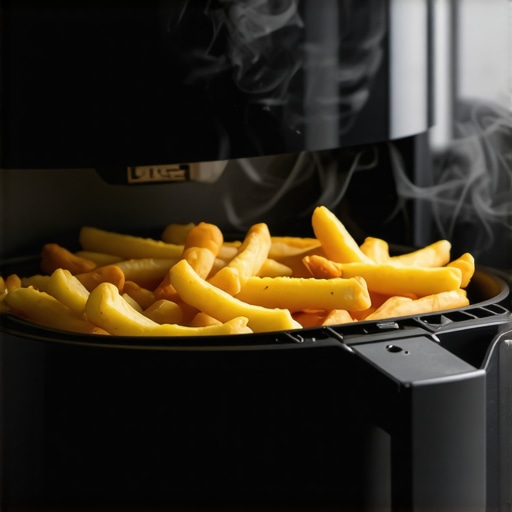
The myth of the maintenance-free kitchen has cost homeowners thousands in underutilized premium appliances. Most users treat their air fryer as a magic box, yet they fail to understand the fundamental thermodynamics of high-velocity convection. If your potatoes emerge as sad, oil-soaked sponges rather than crisp, structural marvels, you are not failing at cooking; you are failing at fluid dynamics. After fifteen years of consulting on high-end kitchen installations and diagnosing mechanical thermal failures, I have seen every mistake in the book. The stake here is simple. A four-hundred-dollar appliance sitting idle because it produces subpar results is a bad investment. You bought the gear for a specific outcome. You aren’t getting it. Here is why.
The Reason Your Air Fryer Fries are Always Limp
The primary culprit is moisture saturation within the starch matrix. When a potato slice heats up, the internal water expands and attempts to escape as vapor. In a standard deep fryer, the oil temperature is so high that this vapor creates a pressure barrier, preventing oil from entering the potato until the crust is formed. In an air fryer, we rely on the Boundary Layer effect. If the airflow is obstructed or the humidity inside the basket reaches a tipping point, that vapor cannot dissipate. It lingers. It softens the developing crust. This is often exacerbated when users do not realize that most air fryers dont reach their advertised temperature due to voltage fluctuations or poor heating element calibration. The result? A slow steam instead of a rapid sear.
The Engineering Reality of Air Displacement
Every luxury air fryer is essentially a localized convection engine. The fan must move a specific volume of air—measured in Cubic Feet per Minute (CFM)—to strip away the cold, moist air surrounding the food. When you overcrowd the basket, you create a physical blockade. The air cannot circulate. Instead of a vortex, you get stagnation. To fix this, you must respect the load-to-volume ratio. My technical truth: Never fill a basket more than thirty percent of its depth if you want a true crisp. The science of the Maillard reaction requires the surface temperature of the potato to exceed 285°F (140°C) almost instantly. If the fan is clogged or dirty, the heat transfer coefficient drops. This is why you must know how to clean the fan inside your air fryer without taking it apart to maintain optimal velocity. According to the Culinary Institute of America, moisture is the enemy of browning. Without rapid air movement, you are just baking a potato in a very small, very loud oven.
Surface Tension and the Starch Problem
The second failure point is the starch itself. Professional chefs use a technique called ‘double-blanching.’ For the home user, this translates to removing excess surface starch. If you don’t rinse your cut potatoes until the water runs clear, that starch turns into a sticky glue during the initial heating phase. This glue traps moisture inside. I’ve stood in custom-built sculleries where the owner complained about soggy sweet potato fries, only to find they were skipping the cold-water soak entirely. You can see the results of proper preparation in the latest air fryers revolution top models that redefine healthy cooking in 2025, which utilize improved basket designs to mitigate this. Use a high-smoke point fat like avocado oil. Avoid low-quality aerosols that contain soy lecithin, as they build up a tacky residue on the heating element, further reducing its efficiency.
Market Corrections and Future Tech
We are seeing a shift toward ‘Smart Humidity Sensing’ in the 2025-2026 appliance cycle. Manufacturers are finally integrating sensors that detect the moisture output from the food and adjust the fan speed dynamically. This is a response to the ‘Operational Risk’ of human error—namely, the tendency to dump two pounds of frozen potatoes into a machine designed for one. Regulatory changes regarding energy efficiency are also forcing brands to use better-insulated chambers, which helps maintain the ‘Dry Heat’ environment necessary for crispness. We are moving away from simple timers and toward atmospheric control. This is the same logic used in industrial HVAC systems, as standardized by ASHRAE standards for residential ventilation. If your machine doesn’t breathe, your food doesn’t crisp.
The Executive Verdict
Hold your current equipment if it is a high-end model with a fan speed over 2,000 RPM. Buy a new unit only if your current one lacks a dedicated ‘Dehydrate’ or ‘Max Crisp’ setting, as these usually indicate a higher-wattage heating coil. My actionable strategy: Rinse your potatoes in ice-cold water for 30 minutes, pat them bone-dry with a lint-free cloth, and preheat your air fryer for at least 5 minutes at the highest setting before the food enters. The thermal mass of the empty basket helps maintain temperature when the cold food is introduced.
Frequently Asked Questions
Why does my air fryer smell like burning oil? This usually indicates carbon buildup on the heating element. When fat splatters and isn’t cleaned, it polymerizes and smokes. Periodic deep cleaning of the internal ceiling is required.
Can I use parchment paper? Only if it is perforated. Solid paper blocks the very airflow the machine depends on for crisping. You are effectively turning your air fryer into a steamer.
Why are my fries crispy on the outside but raw inside? Your temperature is too high too fast. The exterior is setting before the heat can penetrate the center. Lower the heat by 20 degrees and add three minutes to the timer.