How to Organize Your Baking Cabinet for Better Workflow
Most kitchen organization advice is purely aesthetic fluff. It focuses on pretty jars rather than the physics of motion. In fifteen years of designing luxury kitchen environments, I have seen hundreds of high-end builds fail because the layout ignored the ‘kinetic load’ of baking. Baking is a science of ratios and timing. If you are hunting for a whisk while your caramel is hitting 240 degrees, your workflow is broken. The stake here is not just a messy counter. It is the lifespan of your expensive machinery and the quality of your output. Poorly placed appliances lead to strained motors and physical fatigue. Efficiency is the only metric that matters.
The Engineering of Reach
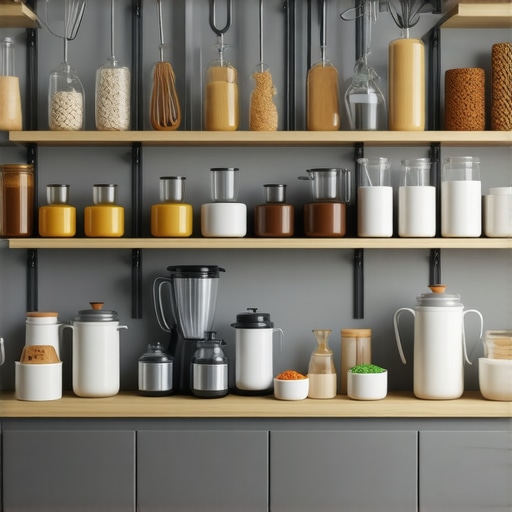
Workflow optimization begins with the primary heavy-lifters. Your stand mixer is the center of gravity. If it sits in a deep corner, you will use it less. Or worse, you will drag it across a granite countertop, risking scratches. We utilize the ‘Heavy Zone’ principle. This dictates that any item over fifteen pounds stays between hip and chest height. I often recommend the best drawer organizers for custom luxury cabinetry to handle the smaller, high-frequency tools like offsets and bench scrapers. High-torque tasks require stability. When you store a 30-pound mixer on a flimsy shelf, the vibration causes micro-fretting in the cabinet joints. You need a dedicated lift or a reinforced pull-out tray. This isn’t about tidiness. It is about structural integrity and reducing the cycle time from ‘desire to bake’ to ‘active mixing.’
Physics of Weight and Frequency
Consider the ‘Operational Risk’ of cold storage versus prep space. Professionals know that temperature gradients affect ingredient performance. If your baking cabinet is too close to the oven stack, your dry goods will degrade. Flour is hygroscopic; it absorbs moisture and ambient heat. We see this often in poorly ventilated luxury kitchens. Your stand mixer motor also needs room to breathe. When tucked into a tight cabinet immediately after use, heat soak can damage the internal grease consistency. This is especially true when your stand mixer motor struggles with cold butter, generating excess internal heat. Verticality is your friend here. Heavy Dutch ovens and premium cookware belong on pull-out glides rated for at least 100 pounds. According to standards set by the National Kitchen & Bath Association (NKBA), the clearance for work zones should permit a 360-degree rotation of the body without obstruction. If you have to move a stack of bowls to get to your scale, you have failed the engineering test.
Sensory Realities and Implementation Risks
The reality of a working kitchen is messy. Flour is a fine abrasive. It gets into the ball bearings of your drawer slides. I’ve seen $50,000 cabinetry sets ruined because the owner didn’t account for ‘dust infiltration.’ You feel it first. The glide starts to catch. You hear a dry, metallic rasp. That is the sound of your investment losing value. To prevent this, we specify sealed bearing slides. Furthermore, lighting is a technical necessity, not a mood-setter. Shadowed corners lead to measurement errors. Using the under-cabinet plug-strip trick for a clean backsplash ensures that you have power exactly where the mixer sits, preventing dangerous cord-stretch across wet surfaces. I remember a client who insisted on storing her professional-grade mixer on a high-gloss marble shelf. The first time she hit speed four with a stiff bread dough, the machine ‘walked’ right off the edge. The result? A shattered machine and a cracked floor. Knowing how to fix a wobbly stand mixer in 10 seconds can save your countertop, but proper placement prevents the wobble from becoming a catastrophe.
Strategic Foresight for 2025 Kitchens
The industry is moving toward ‘Discrete Integration.’ We are seeing a shift away from appliance garages and toward dedicated ‘Work Niches’ that are plumbed and powered. Future-proofing your baking zone means accounting for the rise of smart ovens and integrated scales. In the next 12 to 24 months, expect to see more demand for climate-controlled dry cabinetry to protect expensive organic grains. We are also seeing a regulatory push toward more stringent ventilation requirements for high-heat air fryers and convection units. If your cabinet design doesn’t account for these thermal loads, you will face warped doors and peeling veneers. Second-order effects of poor airflow are real. Mold can develop behind cabinets where steam from a stand mixer’s splash guard meets a cold exterior wall. Always leave a 2-inch thermal gap.
The Executive Verdict
My recommendation is clear: Buy the best hardware, then build the cabinet around it. If you are currently dealing with a cluttered mess, audit your tools. If you haven’t used it in six months, it’s a ‘Hold’—move it to deep storage. If you use it weekly, it must be in the ‘Active Reach’ zone. Your high-performance gear, like espresso machines or stand mixers, requires a dedicated footprint. If your stand mixer bowl won’t unlock after mixing, it’s often because the base wasn’t level to begin with. Level the cabinet, fix the workflow, and the baking takes care of itself. Stop organizing for the camera and start organizing for the task.
Frequently Asked Questions
Q: What is the best height for a stand mixer shelf?
A: Between 30 and 34 inches. This allows for proper leverage when locking the bowl or changing attachments without straining your shoulders.
Q: Should I use plastic or glass bins for flour?
A: Airtight glass is superior for pest prevention and thermal stability, but ensure they are stored on reinforced shelves due to the weight.
Q: How do I stop my cabinet from smelling like stale oil?
A: This is usually due to poor ventilation around air fryers or mixers. Ensure your ‘Active Zone’ has at least 300 CFM of airflow or a dedicated vent path.
Q: Is a pull-out mixer lift worth the cost?
A: Only if it is a heavy-duty model with a mechanical lock. Cheap lifts vibrate, which can damage both the machine and the cabinet frame over time.