
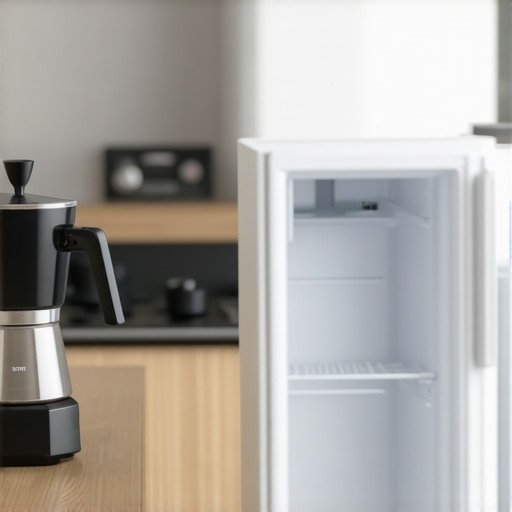
Why You Should Never Store Your Portafilter in the Fridge
Espresso is a discipline of thermodynamics where every millijoule of heat counts. Over 15 years of repairing high-end espresso machines and designing luxury kitchen workflows, I have seen every ‘hack’ in the book. One of the most persistent and damaging is the idea that a cold portafilter helps preserve the volatile oils of the coffee during extraction. This isn’t just wrong; it is a fundamental misunderstanding of thermal mass. When you lock a 40-degree portafilter into a 200-degree group head, you aren’t protecting the coffee. You are initiating a thermal crash that destroys the pressure profile and ruins the shot. The weight of the industrial grade steel in a professional portafilter is designed to hold heat, not reject it. By refrigerating the metal, you turn it into a massive heat sink that sucks energy away from the water the moment the pump engages.
The science is unforgiving. Water at 9 bars of pressure behaves predictably until it hits a cold surface. A chilled portafilter causes the water temperature to drop instantly by as much as 30 degrees Fahrenheit. This temperature swing leads to under-extraction, resulting in a sour, thin, and watery cup. If you have been wondering why your espresso is watery and lacks crema, your storage habits are likely to blame. The PID controller on your machine is calibrated to maintain a specific temperature at the group head. It cannot compensate for a 16-ounce block of ice-cold brass suddenly introduced to the system. The result? A stalled extraction and a waste of premium beans.
The Engineering Reality of Thermal Shock
Metal expands and contracts. While a portafilter is a robust tool, constant extreme temperature cycling between a 40-degree fridge and a 200-degree group head stresses the chrome plating and the internal structural integrity of the ears. This is not a theory; I have seen flaking chrome and micro-fractures in high-end gear that lived in a refrigerator. Furthermore, the condensation factor is a silent killer. When you pull a cold portafilter into a humid kitchen, moisture immediately forms on the surface and inside the spout. This moisture mixes with the dry coffee grounds, causing premature swelling and uneven resistance. This is a primary driver behind why your espresso shots are channeling and how to stop it. You want a dry, hot environment for the puck to ensure the water moves through the bed of coffee at a uniform rate.
The Condensation Trap and Component Failure
Moisture is the enemy of precision. If you are using a machine with advanced internals, like those discussed in the guide on the difference between E61 and saturated group heads, you are paying for thermal stability. Refrigerating your portafilter actively fights the machine’s engineering. Beyond the coffee quality, the moisture can migrate. It gets into the group head gasket, hardening the rubber prematurely. It causes the shower screen to accumulate oils faster because the temperature differential causes the coffee to stick rather than wash away. To maintain your machine, you should focus on how to remove coffee oils from your group head without chemicals rather than trying to cool the hardware down. According to research from the Specialty Coffee Association (SCA), temperature consistency is the third most important variable in extraction quality, following grind size and water chemistry.
The smell of burnt rubber or metallic bitterness often follows these cooling experiments. It isn’t just about the espresso; this logic applies to other luxury kitchen tools. You wouldn’t put a stand mixer’s motor housing in the fridge to keep the dough cool; you would chill the bowl. In the realm of premium cookware, thermal shock is the leading cause of warped pans and cracked enamel. Treat your espresso machine with the same respect. The industrial grade steel is a tool, not a cooling element. If you notice a drop in performance, it might be time to investigate how to tell if your espresso machine pump is failing, as cold-start extractions put unnecessary strain on the pump’s bypass valve.
Market Corrections and Future Trends
The industry is moving toward higher thermal transparency. We are seeing more machines with ‘smart’ portafilters that have embedded sensors to track temperature in real-time. In the next 24 months, I expect to see prosumer machines that will refuse to pull a shot if the portafilter temperature is more than 5 degrees off the target. Regulatory changes regarding energy efficiency in appliances are also forcing manufacturers to use less metal, which makes thermal stability even harder to achieve. Keeping your gear at room temperature, or ideally, locked into the group head while the machine warms up, is the only way to stay ahead of these technical requirements. This ensures the entire pathway, from the boiler to the cup, is thermally saturated.
The Executive Verdict
My recommendation is decisive: The portafilter stays on the machine. Period. If you are seeking a colder drink, look into pressurized cold brew or flash-chilled methods that happen after the extraction, never during it. Storing metal in the fridge is a recipe for hardware failure and mediocre coffee. The ROI on your luxury kitchen equipment depends on following the physics of the trade. If you are in a situation where your kitchen is excessively hot, keep the portafilter in a dry drawer, but never the refrigerator. Strategy: Always pre-heat your portafilter by running a ‘blank’ shot through it before loading the coffee. This flushes any stale water and brings the metal to the correct operating temperature.
Frequently Asked Questions
Does a cold portafilter help with dark roasts? No. Dark roasts are more soluble and extract faster; a cold portafilter will only lead to an uneven, sour extraction of those oils.
Can I put the basket in the fridge but not the handle? Still no. The basket is the primary contact point for the water. Chilling it will create the same thermal sink effect and condensation issues mentioned above.
How long should a portafilter pre-heat on the machine? For an E61 group head, at least 20-30 minutes. For a saturated group head, 10-15 minutes is usually sufficient to reach thermal equilibrium.
Will a cold portafilter stop my machine from overheating? No. If your machine is overheating, you have a pressure stat or PID issue. Using a cold portafilter is like putting a band-aid on a broken leg; it won’t fix the internal mechanical failure.