
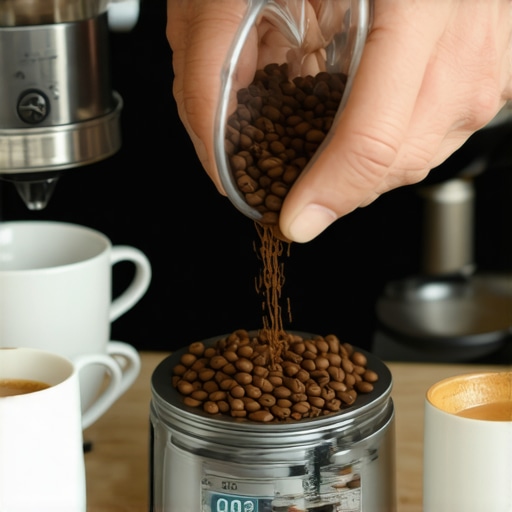
The Coffee Scale Feature You Are Probably Ignoring
Your 36-gram yield is a lie. After two decades in the luxury kitchen industry, I have seen thousands of enthusiasts drop five figures on espresso machines only to treat their coffee scale like a simple kitchen tool. It is not a digital ruler. It is a speedometer. The feature you are likely ignoring is the real-time flow rate indicator. Without it, you are merely measuring the result of a process, not the process itself. If the velocity of your extraction fluctuates, your flavor profile shifts toward bitterness or acidity, regardless of the final weight. The stakes are high: inconsistent flow leads to uneven extraction, turning a $50 bag of Gesha beans into a muddled mess. After running this company and seeing the mechanical failures of low-end sensors, I can tell you that precision is the only path to repeatability.
The Extraction Velocity Paradox
Weight is a static metric, but espresso is dynamic. When you engage the pump on prosumer espresso machines, water under nine bars of pressure forces its way through a compressed puck of coffee. Most users stare at the total grams. The technical purist looks at the grams per second (g/s). A steady flow rate of 1.2g/s to 1.5g/s usually indicates a healthy resistance. If your scale lacks a high-frequency sample rate—meaning it updates fewer than 20 times per second—you are reacting to data that is already half a second old. By the time you see 36 grams, the puck has likely started channeling. Using a scale with a flow-rate bar allows you to see the micro-deviations that indicate why your espresso shots are channeling before the blonding occurs. This is the same level of precision required when calibrating high-end stand mixers for delicate emulsions; the rate of change is more vital than the volume.
Hardware Limitations and Sensor Drift
The messy reality? Most luxury kitchen environments are hostile toward sensitive electronics. Heat from the drip tray and moisture from the steam wand cause thermal expansion in the load cell. This leads to “drift,” where the weight fluctuates while the scale is empty. I have seen countless $800 setups fail because the owner used a cheap plastic scale that could not handle the hydrostatic pressure or heat transfer of a heavy brass portafilter. The result? Avoidable failure. Professional-grade scales use electromagnetic force restoration or high-grade strain gauges that are shielded from the thermal mass of the machine. If you do not how to deep clean a coffee scale without damaging the sensors, you will eventually find that your 18-gram dose is actually 17.4 grams, throwing off your entire ratio. The tactile click of the stainless steel toggle and the weight of the industrial-grade steel casing are not just for aesthetics; they are for stability.
The Engineering Reality of Thermal Mass
Standard methods fail because they ignore the cooling effect of the scale’s surface. A cold metal scale plate acts as a heat sink, drawing energy away from the espresso as it drops. This is why top-tier premium cookware and coffee tools emphasize thermal management. When you are dialing in, you must also how to calibrate your coffee grinder after changing roasts to match the flow rate your scale is reporting. According to reports from the Specialty Coffee Association (SCA), consistency in brew temperature and flow is the primary differentiator between amateur and professional results. Just as air fryers rely on consistent airflow velocity for crisping, espresso relies on a predictable liquid velocity for flavor clarity.
Market Corrections Ahead
The industry is moving toward total integration. Within the next 24 months, we expect to see more espresso machines with built-in, high-sample-rate scales that communicate directly with the pump to adjust pressure based on real-time flow data. This second-order effect will make manual timing obsolete. We are already seeing this in the world of stand mixers and air fryers, where internal sensors adjust motor torque and fan speed based on resistance and moisture levels. Regulatory changes regarding electronic waste may also push manufacturers toward more repairable, modular scale designs rather than the disposable plastic units currently flooding the market. The National Institute of Standards and Technology (NIST) provides guidelines for weighing precision that many consumer brands currently ignore, but a shift toward professional standards is inevitable.
The Executive Verdict
If you are serious about your luxury kitchen performance, stop looking at the timer and start looking at the flow meter. My recommendation is a “Buy” on any scale with a minimum 20Hz update frequency and a dedicated flow-velocity display. If you are using a scale that lags, you are guessing. The strategy is simple: stabilize your puck prep using a distribution tool before tamping espresso, then monitor the flow rate for the first 10 seconds of the shot. If it spikes too early, your grind is too coarse or your distribution is flawed. Precision is not a luxury; it is a requirement for quality.
FAQ
Does flow rate matter for pour-over coffee? Yes, it is arguably more important as it dictates the agitation level of the grounds. How do I know if my scale has a high sample rate? Look for the “Hz” rating in the technical specifications; anything above 10Hz is acceptable, but 20Hz is professional grade. Why does my scale weight jump around? This is usually caused by air currents or vibration from the espresso machines pump; use a silicone mat to decouple the scale. Can I use my coffee scale for baking in stand mixers? Only if the capacity exceeds 2kg, as many precision coffee scales are capped at 500g or 2kg.