
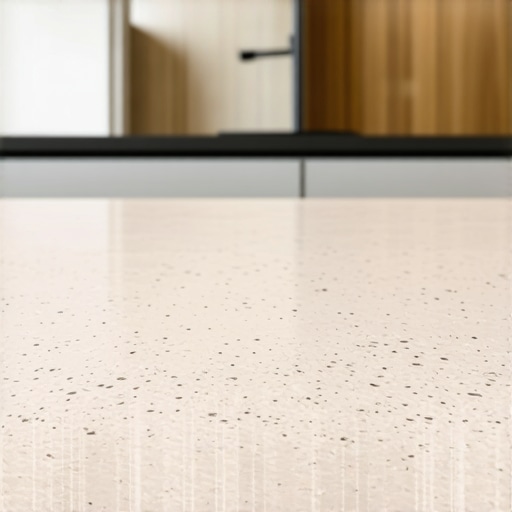
The Reason Your Quartz Countertop Feels Gritty After Cleaning
That persistent sand-like texture on your luxury kitchen counters isn’t always missed dirt. It is often a chemical byproduct of the very cleaners you trust. After fifteen years in the high-end kitchen renovation sector, I’ve seen homeowners ruin premium cookware and $20,000 surfaces because they misunderstood the molecular bonding of engineered stone. Quartz is non-porous, yes, but its resin binder is a magnet for surfactant buildup. If you are feeling grit, you are likely feeling a microscopic battlefield of dried soap and hard water minerals. The stake here is the longevity of your slab. Ignore this, and the grit becomes the precursor to permanent hazing.
The Chemical Reality of Surface Tension
Quartz surfaces consist of roughly 90-94% crushed natural stone bound by polyester resins. This engineering creates a surface that doesn’t need sealing like marble, but it introduces a different vulnerability. Standard dish soaps contain surfactants designed to lift grease from air fryers and stainless steel pans. On quartz, these surfactants often fail to rinse away completely. Instead, they form a tacky film. When the water evaporates, the minerals left behind—calcium and magnesium—get trapped in this sticky matrix. The result? A tactile sensation of sandpaper. It is a failure of rinsing, not scrubbing. If you’ve been evaluating the best countertop material for heavy kitchen appliances, you must account for this maintenance nuance. The resin is softer than the stone. Aggressive scrubbing to remove the ‘grit’ can actually micro-scratch the resin, creating even more places for residue to hide.
Why Standard Methods Fail
Most people reach for a ‘multi-surface’ spray. This is a mistake. These products are formulated for high-evaporation rates on glass or plastic. On dense quartz, they often leave behind a streak-heavy residue that attracts dust. Unlike marble countertops staining even after sealing, quartz doesn’t absorb the cleaner; it hosts it on the surface. When you run your hand across the island after a morning of prep with stand mixers or espresso machines, you are feeling ‘soap scum’ in its most refined form. I have stood in kitchens where clients used vinegar-based solutions, thinking they were being ‘natural.’ The acidity doesn’t hurt the stone, but it can slowly break down the resin’s finish over years of daily use. It is death by a thousand wipes.
Operational Risks and Implementation Realities
The messiest part of high-end maintenance is the water quality itself. In areas with high TDS (Total Dissolved Solids), every time you wipe your counter, you are essentially painting on a thin layer of rock. I remember a project where a client insisted their new black quartz was ‘pitting.’ It wasn’t. They were using a heavy-duty degreaser intended for industrial luxury kitchen environments without a proper neutralizer. The degreaser was reacting with the minerals in their well water, creating a crust that felt like fine glass beads. To fix this, you don’t need more power; you need chemistry. A pH-neutral cleaner and, crucially, a microfiber cloth that is actually clean. Most ‘grit’ is redistributed from a dirty sponge.
[IMAGE_PLACEHOLDER]
Market Corrections and Future Trends
The industry is shifting toward ‘Suede’ and ‘Matte’ finishes. While these look stunning under modern LED lighting, they are even more prone to the ‘gritty’ feel. The increased surface area of a matte finish provides more ‘teeth’ for soap residue to grab onto. In the next 24 months, I expect to see a surge in specialized quartz-specific surfactants that use chelating agents to strip minerals without degrading polyester binders. We are also seeing a move away from the ‘over-cleaned’ aesthetic. Smart homeowners are realizing that more chemicals do not equal more clean. According to reports from the Natural Stone Institute, improper maintenance is the leading cause of warranty claims for engineered stone, not manufacturing defects.
The Executive Verdict
If your counters feel like they have a layer of dust despite just being wiped, stop using dish soap immediately. Switch to a dedicated stone cleaner or a 70% isopropyl alcohol and water mix (diluted 1:4). This flashes off quickly and breaks down the surfactant bond. If you are in a high-traffic kitchen using espresso machines and heavy-duty premium cookware daily, perform a ‘deep clear’ once a week with a non-abrasive cream cleanser to lift the mineral buildup. For those dealing with other surface issues, learning how to remove fingerprints from black stainless steel appliances can help maintain the overall visual cohesion of the space. Consistency beats intensity every time.
Frequently Asked Questions
Can I use a magic eraser on quartz grit? No. Melamine sponges are abrasive. They will dull the factory polish of the resin binder, leading to a permanent ‘dead spot’ that will attract more stains later.
Is Windex safe for quartz? Occasionally, but not for daily use. The ammonia can eventually cause the resin to yellow or become brittle over a long-term horizon.
Why does the grit only appear near the sink? This is where water splashes and evaporates most frequently. The high concentration of water leads to faster mineral (limescale) accumulation compared to the rest of the island.