
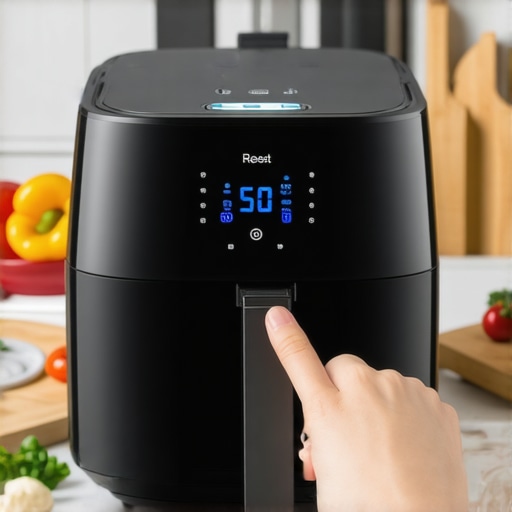
Why Your Air Fryer Display Is Flickering and How to Reset It
A flickering display on a high-end air fryer is never just a visual annoyance. It is a diagnostic signal. After fifteen years of diagnosing failure points in the luxury kitchen appliance sector, I have learned that digital instability usually points to a deeper struggle within the power regulation stage. When you invest in premium air fryers, you expect a certain level of component synergy. When that fails, the stake is not just a dark screen. It is the potential for a catastrophic failure of the logic board during a high-heat cycle. The result? Avoidable failure. This is the reality of modern solid-state electronics in high-heat environments. If the display pulses, the voltage regulation is struggling to keep up with the demands of the heating element and the fan motor.
The Engineering Reality
Most consumer-grade electronics are not built to survive the localized thermal environment of a compact convection oven. In a luxury kitchen, we often see cabinets that trap heat, compounding the stress on internal capacitors. The flickering is almost always caused by ‘ripple voltage.’ This occurs when the electrolytic capacitors on the control board begin to dry out or fail due to heat exposure. They lose their ability to smooth out the AC-to-DC conversion. The microcontroller then experiences micro-brownouts. It reboots or refreshes thousands of times per second. This is what creates the flicker. Unlike the robust circuits found in high-end espresso machines which often have dedicated heat shielding, some air fryer designs leave the logic board too close to the exhaust path.
Circuit Stability and Thermal Thresholds
The relationship between the heating element and the display is parasitic. When the 1500-watt coil engages, it creates a massive voltage drop. If the power supply unit (PSU) within the air fryer is undersized or aging, the display takes the hit. This is why you might notice the flickering increases only when the unit is reaching temperature. It is a sign of ‘thermal fatigue’ on the solder joints. Professional-grade rattling components or loose screws can also contribute to vibration-induced micro-arcs on the power input. If the electrical current is not stable, the pulse-width modulation (PWM) controlling the LEDs fails. This is not a software bug. It is a hardware cry for help.
The Risk of Electrical Arcing
I remember a specific case last winter. A client had a top-tier unit built into a tight scullery nook. The display flickered for weeks. They ignored it. Eventually, the failing capacitor vented, releasing a sharp, acrid smell of ozone and burning electrolyte. This is a common operational risk when users confuse a luxury aesthetic with industrial durability. If you see the screen jumping, you are likely dealing with EMI (Electromagnetic Interference) from the fan motor or a degrading relay. If the unit is drawing too much power on a shared circuit, especially one shared with heavy-duty stand mixers, the line noise will manifest in the most sensitive component: the LCD.
The Macro View of Component Integrity
Looking toward 2025, the industry is seeing a shift in how premium cookware and smart appliances handle power. Regulatory changes in energy efficiency are forcing manufacturers to use switching power supplies that are more efficient but also more complex and prone to interference. We are moving away from simple transformers toward high-frequency oscillators. This means your air fryer is essentially a small computer sitting next to a furnace. The second-order effect of this trend is a shorter lifespan for ‘smart’ features compared to the ‘dumb’ appliances of thirty years ago. According to the Association of Home Appliance Manufacturers, the average lifespan of small heating appliances is being impacted by these sensitive digital interfaces.
The Executive Verdict
If your display is flickering, do not assume a factory reset is a permanent fix. However, it is the first step in a diagnostic chain. To reset most high-end units, you must perform a ‘Hard Power Cycle.’ Unplug the unit for a minimum of ten minutes. This allows the capacitors to fully discharge and clears the volatile memory of the microcontroller. If the flicker persists after plugging it back in—ideally into a different circuit—the board is failing. If you are in a situation where the unit is under warranty, demand a replacement of the entire control module, not just the interface. My recommendation? If the unit is out of warranty and the flicker is accompanied by a change in fan speed, it is time to exit that asset and upgrade to a unit with better thermal separation. Using the wrong oils, such as when you use olive oil for high heat, can also lead to residue buildup on internal sensors, which causes the processor to work harder, generating more internal heat.
How do I know if the flicker is dangerous?
If the flickering is accompanied by the smell of hot plastic or if the display becomes hot to the touch, stop usage immediately. This indicates a failing transformer or an electrical short that could lead to a fire. Refer to Underwriters Laboratories safety guidelines for small kitchen heating elements.
Can a firmware update fix a flickering screen?
Rarely. While some manufacturers claim software patches can optimize the PWM frequency to stop perceived flicker, this is usually a band-aid for poor hardware filtering. If the hardware is failing, no code can stabilize the voltage.
Does the flickering affect the cooking temperature?
Indirectly, yes. If the logic board is receiving unstable power, the thermistor readings—which tell the machine how hot it is—may become erratic. This leads to uneven cooking or the unit shutting down prematurely to prevent overheating.
Why does the flicker happen only when the fan is on?
The fan motor creates back-EMF (Electromotive Force). If the protection diodes on the circuit board are weak, this electrical noise ‘leaks’ into the display circuit. It is a sign of a low-quality board design or aging components.
Will using a surge protector help?
A high-quality power conditioner or surge protector can help filter out line noise from other appliances, but it cannot fix internal damage already done to the capacitors on the air fryer’s mainboard.