
The Secret to Making Pizza Dough That Doesn’t Break the Mixer
Standard residential stand mixers face a brutal reality when confronted with the high-torque demands of pizza dough. Most owners assume that if a machine sits on a luxury kitchen counter, it can handle any task. This is a false premise. After 15 years of repairing high-end kitchen equipment and seeing the internal carnage of stripped nylon gears, I can tell you that the secret isn’t just the recipe; it’s the mechanical management of stress. Most home bakers treat their equipment like a black box. They turn it on, walk away, and wonder why the motor housing smells like an electrical fire ten minutes later. The stake here is simple: a $1,000 investment in stand mixers can be liquidated in a single afternoon of aggressive kneading. Avoidable failure. That is the result of ignoring the physics of dough rheology.
The Engineering Reality
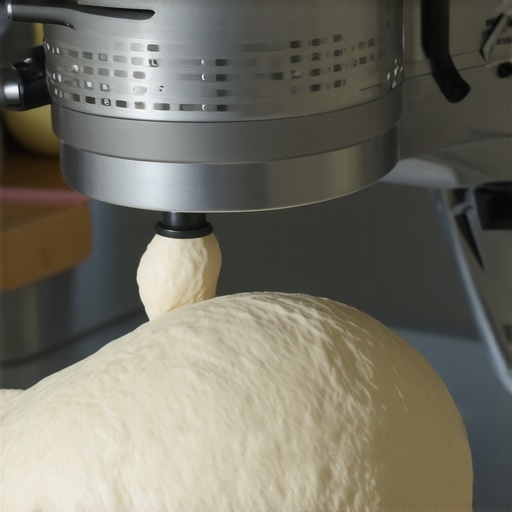
The core issue is heat dissipation and gear material. Residential machines often utilize a sacrificial gear—usually plastic or nylon—designed to break before the motor burns out. While this protects the expensive copper windings, it renders the unit useless until a technician intervenes. Professional-grade units used in a luxury kitchen environment should ideally feature high-torque DC motors. Unlike AC motors, DC motors maintain consistent torque at low speeds, which is where dough kneading actually happens. When you attempt to knead a low-hydration, stiff dough at high speeds, you create a harmonic vibration that shakes the transmission out of alignment. I have seen countless machines where the bowl won’t stay locked because the locking lugs have been sheared down by the sheer force of the dough climbing the hook. To prevent this, you must understand the ‘hydration-to-speed’ ratio. The stiffer the dough, the slower the planetary movement must be. It is not about speed; it is about the sustained application of force without exceeding the thermal limits of the lubricant inside the gear housing.
[IMAGE_PLACEHOLDER]
The Operational Risks of High Volume
Let’s talk about the smell. That sharp, metallic tang in the air during a long knead is the scent of a motor reaching its thermal limit. If you feel the top of the mixer and it is too hot to touch, the damage is already done. The internal grease is thinning, losing its viscosity, and failing to coat the metal teeth of the main drive. This leads to the ‘clank’—a sound every veteran baker dreads. According to the Bread Bakers Guild of America, consistent dough temperature is vital for fermentation, but excessive friction from a struggling mixer can raise dough temps by 10-15 degrees prematurely. This kills the yeast and ruins the crumb. Furthermore, many enthusiasts forget that overheating during heavy bread dough kneading is often a result of using the wrong attachment. A C-shaped hook pulls the dough, creating lateral tension that pulls the mixer head upward. A spiral hook, however, pushes the dough downward, utilizing the base of the bowl for resistance rather than the motor’s hinge pin.
The Macro View
The industry is shifting toward ‘smart’ appliances, but sensors are no substitute for heavy-duty casting. In the next 24 months, expect to see more luxury kitchen brands integrating brushless motors into their standard lineups. These motors run cooler and offer a longer lifespan, but they come with a higher price tag. We are also seeing a convergence in luxury kitchen design where espresso machines and premium cookware share the same circuit requirements as heavy-duty mixers. High-performance kitchens now require dedicated 20-amp circuits to ensure that when the heater on your espresso machine kicks in, your stand mixer doesn’t experience a voltage drop that causes the motor to stall under a heavy dough load. Economic reports from groups like the National Kitchen & Bath Association suggest that homeowners are prioritizing ‘workhorse’ appliances over aesthetic-only pieces. This is a market correction; people want tools that actually work.
The Executive Verdict
If you are serious about pizza, buy for the motor, not the color. My recommendation is a ‘Hold’ on replacing your current unit if you can switch to a spiral hook and limit knead times to 8 minutes at the lowest speed. However, it is a ‘Buy’ on a commercial-grade DC motor unit if you plan to bake more than twice a week. The ROI is measured in years of service, not the initial cost. Strategy: always add your liquids first, then the flour. This prevents the ‘flour clog’ at the bottom of the bowl that forces the motor to spike in amperage just to get the mass moving. Keep your premium cookware for the oven, but treat your mixer like the industrial engine it is.
Frequently Asked Questions
Q: Why does my mixer bounce on the counter?
A: This is usually due to an incorrect ‘dime test’ height or using too high a speed for the dough’s hydration level. The head is fighting the resistance of the dough mass.
Q: Can I use an air fryer to proof dough?
A: Only if it has a dedicated ‘dehydrate’ or low-temp setting below 90°F; otherwise, you will bake the exterior of the dough ball.
Q: Is a spiral hook better than a C-hook?
A: Categorically, yes. It mimics professional spiral mixers and reduces the vertical stress on the mixer’s locking mechanism.