
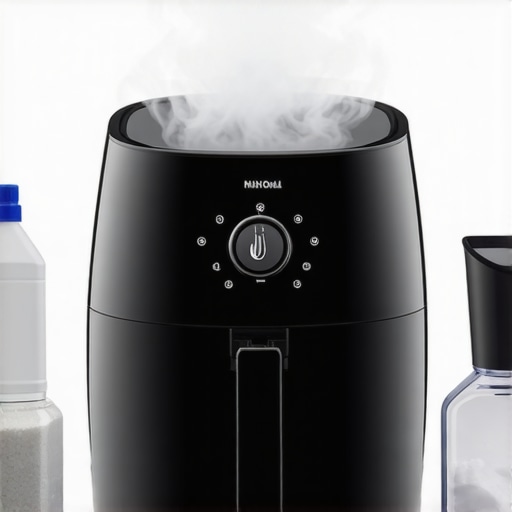
How to Get Rid of the New Plastic Smell in Your Air Fryer
Buying a high-end air fryer should be an immediate upgrade to your culinary workflow, yet many owners are greeted by a sharp, chemical stench that permeates the house. This isn’t a defect; it is a byproduct of modern manufacturing. After 15 years overseeing luxury kitchen installations and hardware procurement, I can tell you that ignoring this ‘new car smell’ is a fundamental error. That odor is the sound of volatile organic compounds (VOCs) and factory lubricants reacting to their first high-heat cycle. If you cook your first meal without addressing this, you are effectively marinating your protein in aerosolized plastic. The stakes are high. Beyond the ruined flavor profile of an expensive salmon fillet, you risk long-term flavor contamination of the basket’s porous surfaces. The result? Avoidable failure.
The Engineering Reality of Factory Off-Gassing
Every premium air fryer leaves the assembly line with a microscopic layer of protective oils on the heating element and fan housing. These prevent corrosion during maritime shipping and warehouse storage. When you first engage the 1500-watt element, these oils reach their smoke point. Simultaneously, the non-stick coating—often a PTFE-based or ceramic hybrid—undergoes a final ‘curing’ phase. This thermal reaction releases the acrid, metallic tang that burns the back of your throat. Understanding the hidden reason your air fryer smells like burnt plastic requires looking at the heat shield materials. Many manufacturers use cost-effective plastic shrouds that, while heat-resistant, still emit gases during the first five to ten hours of operation. It is a thermodynamic inevitability. You cannot bypass the physics of thermal expansion in new polymers.
A cost-benefit analysis of immediate use versus a controlled burn-off reveals a clear winner. Skipping the prep phase saves twenty minutes today but compromises the appliance’s output for weeks. Industry standards from the Association of Home Appliance Manufacturers (AHAM) suggest that while these odors are generally non-toxic in the short term, they indicate an appliance that hasn’t reached operational equilibrium. You want that equilibrium before the food enters the chamber.
The Technical Burn-Off Protocol
To eliminate the stench, you must execute a controlled burn-off. Do not use food. Start by washing the basket and tray with hot, soapy water—avoid abrasive pads. Once dry, place the unit in a well-ventilated area, preferably under a range hood set to maximum. Set the temperature to its highest setting, usually 400°F (204°C), and run it empty for 20 minutes. You will likely see a faint wisp of vapor. This is the factory lubricant exiting the system. If the smell persists, the ‘Steam-Vinegar’ hack is your secondary line of defense. Place a small oven-safe bowl inside with equal parts water and white vinegar, plus a squeeze of lemon. Run it for 10 minutes at 350°F. The steam carries the acetic acid into the nooks of the fan housing, neutralizing the alkaline plastic odors. This is a common tactic in high-end restaurant commissions where we can’t afford a ‘plastic’ note in a tasting menu.
Be wary of why your air fryer is smoking during this process. A little vapor is normal; thick gray smoke suggests a piece of packing material is stuck to the heating coil. I’ve seen clients lose entire kitchens because they didn’t inspect the coil before the first fire-up. A simple flashlight check saves a call to the fire department.
Implementation Risks and Material Integrity
The messy reality of air fryer maintenance involves the delicate balance of the non-stick surface. If you use aggressive degreasers or ‘hacks’ involving heavy baking soda pastes during the first week, you risk micro-abrasions. These abrasions become focal points for future peeling. You must stop ruining your non-stick air fryer trays before you even start. I recall a client in a high-rise who tried to ‘scrub away’ the smell with a steel wool pad. He didn’t just remove the smell; he removed the $400 appliance’s ability to release food. The acrid bite of burning polymer is temporary; a ruined coating is permanent. If the smell is accompanied by a rattling sound, the fan may be hitting a shroud that has warped slightly under the first heat load. This is a structural defect, not an off-gassing issue.
Market Corrections and Future Tech
Looking toward 2025, we are seeing a shift in the luxury kitchen market toward PTFE-free and PFOA-free interiors. Higher-end models are increasingly utilizing stainless steel interiors or borosilicate glass baskets to eliminate the plastic interface entirely. This reduces the initial odor but doesn’t eliminate it—the heating elements still require a burn-off. We are also seeing the rise of 5 silent air fryers that use better insulated brushless DC motors, which run cooler and reduce the heating of the external plastic chassis. Regulatory bodies like the National Sanitation Foundation (NSF) are tightening the screws on ‘off-gas’ durations for home appliances, which will eventually force manufacturers to perform factory-level burn-offs before shipping. For now, that labor falls on you, the owner.
The Executive Verdict
If you have a new air fryer, do not cook in it tonight. Perform two 20-minute dry cycles at maximum heat with the windows open. If the smell remains, utilize the vinegar steam method. Do not use chemical deodorizers; you are dealing with a food-contact surface. If the unit still smells like a tire fire after five hours of total run time, the internal insulation is likely faulty. In that case, exercise your warranty immediately. For those in a high-production home kitchen, the extra 40 minutes of prep is the only way to ensure the integrity of your ingredients. Proper seasoning isn’t just for cast iron; it’s for the modern air fryer too.
Common Questions Regarding New Air Fryer Odors
Is the plastic smell toxic to my family?
In standard doses during a 20-minute burn-off, it is primarily a nuisance. However, pet birds are highly sensitive to PTFE fumes, so keep them in a separate room with the door closed during the initial heating cycles.
How many times should I run the burn-off?
Most premium units require two 20-minute cycles. If you bought a budget-tier model, it may require up to four cycles before the air is neutral.
Can I use coffee grounds to absorb the smell?
No. Coffee grounds are great for refrigerators, but in a high-heat environment, they can dry out and become a fire hazard if they get sucked into the fan assembly. Stick to the vinegar steam method.
Why does the smell come back after a few weeks?
This usually indicates grease buildup on the heating element rather than plastic off-gassing. Deep clean the coil once it is completely cool to resolve this.