
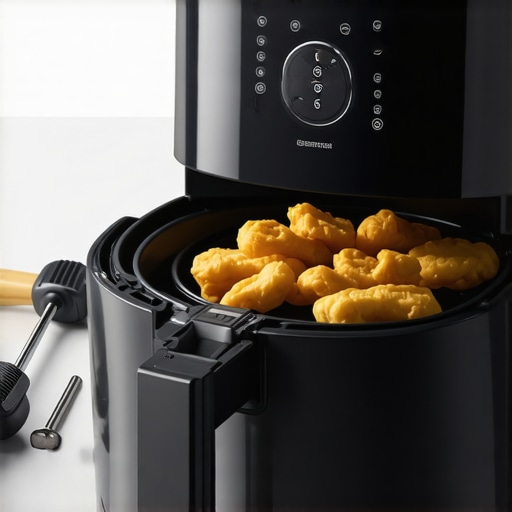
How to Fix an Air Fryer That Isn’t Getting Your Food Crispy Enough
Crispy food in a luxury kitchen environment is a matter of thermodynamic efficiency. If your appliance is yielding soggy results, the failure is likely a breakdown in the air-to-surface heat transfer coefficient. After fifteen years in the high-end appliance sector, I have diagnosed thousands of units. The problem rarely involves a total mechanical breakdown. Usually, it is a mismatch between ingredient preparation and the machine’s volumetric airflow capacity. An air fryer is essentially a high-velocity convection cell. When that velocity drops, the crisping stops. The result? Avoidable failure. Owners of premium cookware and luxury kitchen suites expect perfection, but even the best hardware requires an understanding of fluid dynamics.
The Airflow Obstruction Reality
Air fryers rely on the rapid movement of heated air to strip away the moisture barrier surrounding food. This is the boundary layer problem. If you pack the basket, you create a physical blockade. The air cannot circulate. Instead of frying, you are steaming. It is a common mistake in the wing test where overcrowding leads to limp skin and wasted energy. For a professional result, the air must touch every square millimeter of the surface simultaneously. This requires a single layer. Anything more is just optimistic steaming. Technical precision dictates that you leave at least twenty percent of the basket floor visible. This allows for the necessary CFM to maintain the Maillard reaction.
The Thermal Gap and Preheating Mechanics
Many users treat these units like a microwave, expecting instant heat. This is a strategic error. Even the most advanced air fryers benefit from a five-minute thermal soak. Cold air hitting cold food leads to a slow temperature ramp-up. During that delay, moisture migrates from the center of the food to the surface, resulting in a rubbery texture. You want the surface to dehydrate instantly. This is why extra crispy sweet potato fries require a high initial thermal shock. If the heating element is caked with carbonized oil, the efficiency drops. You might see the light turn on, but the actual BTU output is hindered by a layer of grease. You must know how to deep clean the interior heating element to maintain that peak performance. According to standards from the Association of Home Appliance Manufacturers (AHAM), consistent airflow is the primary metric for convection efficiency.
Surface Chemistry and Oil Distribution
The term air fryer is a misnomer. You still need oil, but the distribution must be atomic. Large droplets of oil act as thermal insulators. A fine mist, however, increases the surface area for heat conduction. In the world of premium cookware, we understand that oil is a heat transfer medium, not just an ingredient. If you use too much, it pools at the bottom and produces smoke. If you use too little, the food dries out before it browns. The sweet spot is a high-smoke-point oil applied via a pressurized sprayer. This ensures a uniform coat that facilitates the rapid evaporation of surface water. Without this, the air just dries the exterior without creating the structural crunch we associate with high-end frying.
The Mechanical Degradation of the Fan Motor
After years of operational experience, I have seen that fan speed is the first thing to go. A slight wobble in the centrifugal fan or a buildup of debris on the blades reduces the air velocity. You won’t hear a loud bang, but the subtle change in the pitch of the motor tells the story. Lower velocity means the air stays in contact with the heating element too long, getting hotter but moving slower. This burns the outside while leaving the inside raw. It is an engineering imbalance. If you are serious about culinary results, you might eventually look toward more robust solutions like considering a steam oven with high-speed convection settings. These professional-grade units offer a level of control that standard countertop pods cannot match. Engineering papers on convection heat transfer highlight that velocity is often more important than raw temperature for surface browning.
The Executive Verdict
The recommendation for a high-performing kitchen is clear. If your current unit is failing to crisp, do not immediately replace it. Instead, audit your loading patterns and clean the internal heat shields. If the unit is over three years old and showing signs of fan lag, it is time for a market correction. The industry is moving toward integrated convection systems that offer larger volumes and better airflow management. For now, focus on the physics: dry surfaces, high velocity, and zero overcrowding. This is the only way to achieve the results expected in a professional-grade kitchen environment.
Frequently Asked Questions
Why does my air fryer smell like it is burning? This usually indicates carbonized fat on the heating element or the fan blades. It requires a deep mechanical cleaning to prevent smoke and off-flavors.
Can I use parchment paper in the basket? Yes, but only if it does not block the entire airflow path. If the paper covers the holes, the crisping will fail entirely.
Is it better to use frozen or thawed foods? For maximum crispness, thawed and patted-dry foods are superior. Frozen items release a burst of steam that can drop the internal cavity temperature significantly.
How often should I clean the heating coil? Every twenty to thirty uses. A clean coil ensures the infrared radiation contributes effectively to the convection process.