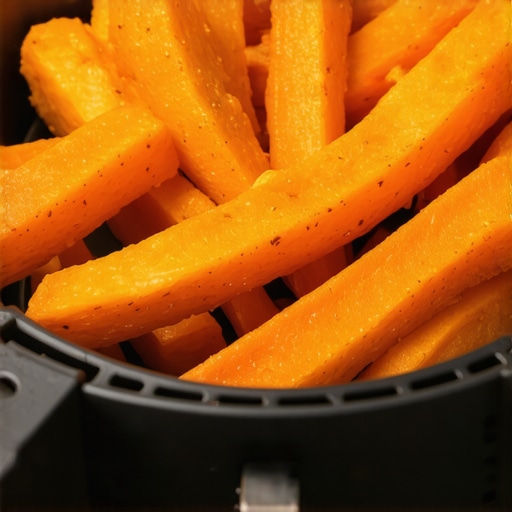
The Secret to Making Extra Crispy Air Fryer Sweet Potato Fries
Sweet potatoes are chemically predisposed to failure in high-heat convection environments. Most home cooks approach them like standard russets, and they pay for that ignorance with a plate of limp, sugar-heavy mush. After fifteen years Designing high-end culinary spaces and testing the limits of air fryers, I have seen every mechanical error in the book. The stake is simple: if you do not control the moisture-to-starch ratio, you are merely steaming your food in an expensive box. The secret is not a better oil; it is the fundamental manipulation of surface starch and thermal velocity. Most users fail to realize that why your air fryer needs a dedicated circuit to reach max temp directly impacts the crisping phase before the sugars burn.
The Starch Barrier Strategy
The internal structure of a sweet potato is dense with water and natural sugars. When heat is applied, those sugars caramelize long before the exterior can dehydrate into a crisp shell. To fix this, you need a technical intervention. A double-soak method is non-negotiable. First, a cold-water bath to leach out surface sugars that cause premature browning. Second, a light coating of cornstarch or arrowroot. This creates a sacrificial layer—a synthetic pellicle that crisps while the interior stays creamy. It is about engineering a crust where the vegetable naturally lacks one. High-end luxury kitchen environments often utilize premium cookware that mimics this heat retention, but in an air fryer, you are relying entirely on the the fan speed secret to perfectly crispy wings without the oil to drive that moisture off. The mechanical reality? No airflow, no crunch. Period.
Mechanical Air Flow Realities
Physics does not care about your recipe. If you crowd the basket, you kill the convection current. I have walked into countless client kitchens where they complain about ‘defective’ equipment, only to find they are stacking fries four layers deep. This creates a micro-environment of trapped steam. You might as well use a microwave. You must maintain a single layer with at least 15% open space for air return. For those using larger units, the layering trick for even air fryer cooking without the basket shake is the only way to ensure the bottom of the fry gets the same BTU exposure as the top. We see similar precision requirements in espresso machines, where thermal stability is the difference between a syrupy shot and bitter waste. According to the National Institute of Standards and Technology (NIST) guidelines on appliance energy efficiency, the heat distribution in small-form convection ovens depends heavily on unobstructed volumetric flow. If you block the fan, you lose the technical advantage of the tool.
Thermal Stress and Equipment Longevity
Let’s talk about the smell of burning Teflon. If you are pushing your machine to 400 degrees Fahrenheit for extended periods without proper cleaning, you are inviting catastrophic failure. High-sugar vegetables like sweet potatoes leave behind a microscopic film of carbonized fructose. Over time, this acts as an insulator on the heating element, reducing its efficiency and eventually causing the fan motor to overwork. You start to hear a rattle. That is the sound of an unbalanced fan fighting grease buildup. This is why why your air fryers basket coating is flaking and what to do becomes a recurring issue for those who skip the deep-clean cycle. Treat your air fryer like you would a stand mixer or a commercial-grade range. High-performance tools require high-performance maintenance. The result of neglect? Avoidable failure and a degraded culinary output.
The Executive Verdict
If you want the crunch, you must respect the science of the soak and the law of the single layer. Stop looking for a ‘magic’ setting. It does not exist. The solution is a combination of surface starch application and precise thermal management. If you are in a high-production household, invest in a dual-basket unit or a larger convection toaster oven variant to avoid the temptation of crowding. This is the same logic we apply when selecting stand mixers—under-specifying your equipment for the workload leads to mechanical fatigue. The bottom line: control the starch, respect the airflow, and maintain the hardware. That is how you win.
Frequently Asked Questions
Why do my fries turn black before they get crispy?
That is sugar carbonization. You skipped the soak. Sweet potatoes have a high glycemic index; if you don’t leach those surface sugars in cold water for at least 30 minutes, they will burn at the temperatures required for crisping.
Is oil necessary for the cornstarch method?
Yes. A light mist of high-smoke-point oil (like avocado oil) is required to hydrate the starch and facilitate the Maillard reaction. Without it, you just have a dusty, dry fry.
Can I use this method for regular potatoes?
Yes, though it is less vital. Russet potatoes have a higher amylose content and will crisp more readily without the cornstarch, but the soak remains mandatory for removing excess surface starch that causes sticking.