
Why DC Motors are the Future of High-End Stand Mixers
The consumer-grade Alternating Current motor is a ticking clock. If you bake bread twice a week, you aren’t just a hobbyist; you are a stress-tester for machinery that was never designed for industrial loads. After running this company for 15 years and tearing down hundreds of stripped gearboxes, I have seen enough burnt-out copper windings to know that the traditional universal motor has reached its limit in the luxury kitchen space. The future belongs to Direct Current (DC) technology, specifically Brushless DC (BLDC) architectures. This is not just a marketing shift. It is a fundamental engineering correction. Getting this wrong is expensive because a dead mixer in the middle of a holiday prep is not just a repair bill; it is a ruined event and a waste of premium ingredients. Most people do not realize that why DC motors are saving heavy sourdough batches from overheating is actually due to how they handle current at low speeds.
The Torque Deficit in Traditional Kitchen Tech
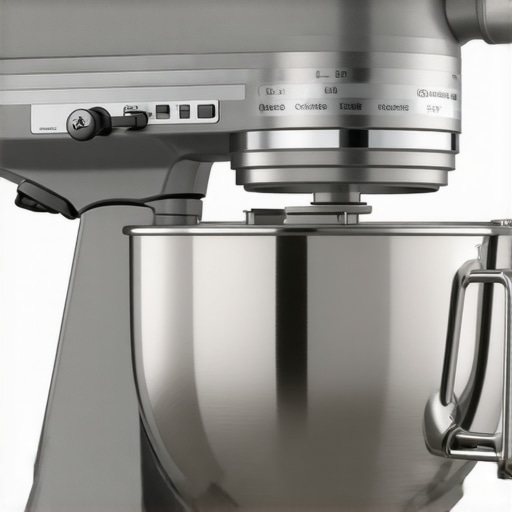
Traditional AC motors in stand mixers rely on high RPMs to generate power and, more importantly, to cool themselves via internal fans. This creates a paradox. When you are kneading a stiff dough, you need low speed and high torque. In an AC system, running at low speed means the fan spins slowly, heat builds up rapidly, and the motor loses efficiency exactly when it needs it most. The result? Total mechanical failure. DC motors operate via Pulse Width Modulation. They provide 100 percent of their rated torque from a dead stop. This constant power delivery means the mixer does not ‘bog down’ when the dough hook meets resistance. The internal magnets do the heavy lifting without the friction and heat generation seen in brushed AC units. This efficiency aligns with the International Electrotechnical Commission standards for high-efficiency motor classifications (IEC 60034-30-1), which are increasingly being applied to high-end domestic appliances to reduce carbon footprints and increase longevity. Beyond simple power, the physical footprint of a DC motor is smaller, allowing for more metal reinforcement in the chassis.
[image]
Mechanical Reality of High Hydration Doughs
The modern baker is obsessed with hydration. We are seeing 75, 80, even 90 percent hydration levels that traditional home mixers simply cannot process without a catastrophic event. I have seen clients try to use entry-level machines for these tasks, only to find that the real reason your sourdough kills cheap planetary mixers is the lack of a service factor rating in the gear train. A DC motor allows for a direct-drive system or a very simple, high-torque gear reduction that bypasses the need for the flimsy belts or plastic gears found in discount models. When the motor is strong enough to maintain a constant speed regardless of the resistance, the bread develops gluten faster and more evenly. This is the ‘Technical Truth’ that national big-box retailers ignore: an AC motor’s speed fluctuates with the dough’s resistance, leading to inconsistent crumb structures. In my showroom, I always tell people that the weight of the machine is your first clue to its quality. Use the weight test to spot a cheap knockoff stand mixer before you even look at the price tag. A heavy machine suggests a DC motor and a die-cast housing that can absorb the vibration of a high-torque motor.
Implementation Risks and The Heat Paradox
Even the best tech has a breaking point. The risk with DC motors is not the motor itself but the electronics governing it. The control boards are sensitive to power surges. If your luxury kitchen is in an area with an unstable grid, you need surge protection. I remember a client in a historic district who blew three control boards in a year because of ‘dirty’ power. The smell of scorched silicone is unmistakable. Another reality? If a DC motor does fail out of warranty, it is often a full replacement rather than a simple carbon brush swap. You are trading low-frequency maintenance for high-stakes durability. You must also understand the speed limits. Even with a powerful motor, why your stand mixer should never be used on high speed for dough remains a vital rule because the mechanical friction within the dough itself can generate enough heat to kill your yeast, regardless of how cool the motor stays. The American Gear Manufacturers Association notes that even the best-lubricated systems have a thermal limit that no amount of motor efficiency can bypass.
Strategic Market Forecast for Premium Appliances
Looking ahead into 2025 and 2026, the luxury kitchen market is moving toward ‘Silent Power.’ The next generation of stand mixers will likely integrate AI-driven sensors that adjust DC output based on dough elasticity in real-time. We are also seeing a shift toward modularity where the motor unit can be serviced without replacing the entire housing. Expect to see more hybrid controls that combine the tactile feel of analog dials with the precision of digital DC controllers. This is not just about baking; it is about the quiet operation required in open-concept homes. A DC motor is significantly quieter than an AC universal motor. It does not have that high-pitched whine that drowns out conversation. For those investing in premium cookware and espresso machines, the sound profile of the kitchen is becoming as important as the aesthetic.
The Professional Verdict
If you are a serious baker, buy DC. It is a ‘Hold’ for those who only mix cake batter once a year, but for everyone else, it is a definitive ‘Buy.’ The ROI is found in the lack of replacements. If you are currently using an AC mixer for bread, stop using high speeds immediately. Check the weight of your next unit. Look for the ‘Brushless’ or ‘DC’ label specifically on the spec sheet. If it doesn’t say it, it’s likely an AC unit masquerading as a pro-sumer model. The engineering reality is simple: torque wins every time.
Frequently Asked Questions
Do DC motors require special maintenance? Not in the traditional sense. Unlike AC motors that may need carbon brushes replaced, DC motors are usually sealed. The maintenance focus shifts to the gear grease and the cooling vents. Why are DC mixers so much more expensive? The magnets and the electronic controllers (PWM) are significantly more costly to manufacture than the simple copper windings of an AC motor. You are paying for the electronics that allow for precision speed control. Can a DC motor handle multiple batches without resting? Yes, far better than AC models. Because they generate less heat and are more efficient, they do not require the 15-minute ‘cool down’ periods that standard household mixers need during heavy kneading. Is the sound difference really that noticeable? Absolutely. An AC mixer often reaches 80-85 decibels, while a high-end DC mixer typically stays in the 60-70 range, making it possible to talk over the machine while it works.