
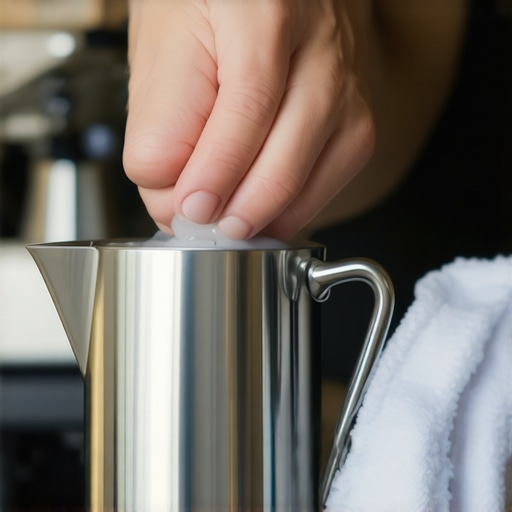
How to Properly Clean Your Barista Milk Frothing Pitcher
A pristine milk pitcher is not a luxury; it is a fundamental requirement for fluid dynamics and thermal stability. Most home enthusiasts treat their stainless steel jugs like any other piece of cutlery, a quick rinse and a wipe. This is a mistake. After fifteen years of diagnosing poor microfoam and tainted flavor profiles in high-end residential setups, I can tell you that residual milk proteins are the silent killers of the perfect latte. If you ignore the microscopic biofilm that bonds to 304-grade stainless steel, your multi-thousand dollar machine will never produce the results you paid for. The result? Flat, metallic-tasting milk and a waste of premium beans.
The Molecular Reality of Protein Buildup
When milk is heated to 140-160 degrees Fahrenheit, the fats and proteins undergo a structural transformation. Some of these compounds form a tenacious bond with the surface of the pitcher. Even a high-pressure rinse leaves behind a transparent film. Over time, this layer hardens and begins to act as an insulator, subtly altering the thermal conductivity of the metal. This makes your temperature readings inaccurate. You think you are at the sweet spot, but the milk is already scalding. This is closely related to why how to clean your espresso machine steam wand without scratching the finish is so vital to the overall hygiene of your station. If the wand is dirty, the pitcher never stands a chance.
The Risk of Thermal Lag and Biofilms
Stainless steel is prized for its durability, but it is not perfectly smooth at a microscopic level. Heat opens up the pores of the metal. If you do not use a surfactant specifically designed to break down milk solids, these fats go rancid inside those pores. I have seen countless cases where a user complains about “bitter” shots, only to find the culprit was a funky pitcher from the morning’s first pour. This neglected maintenance often mirrors the hidden valve problem that makes your espresso taste like battery acid, where internal contamination ruins the sensory experience. You must recognize that the pitcher is an extension of the boiler system during the steaming process.
The Professional Protocol for Daily Maintenance
Stop reaching for the standard dish soap. Most commercial dish soaps contain perfumes that cling to the stainless steel and migrate into your oat milk or whole milk. Instead, use an enzyme-based cleaner once every four hours of use. Between every single drink, you need a high-pressure rinse with 180-degree water. Never let a pitcher sit with milk residue for more than sixty seconds. The proteins begin to polymerize almost immediately as the metal cools. If you allow this to happen, you are effectively baking a layer of plastic-like organic material onto the interior. It is similar to the technical precision required when you stop rinsing your portafilter with cold water between shots; temperature consistency is the only way to maintain the integrity of the extraction and the steam.
Addressing the Hard Water Variable
In many regions, calcium and magnesium in the water supply interact with milk proteins to form “milk stone.” This is a chalky, resilient deposit that resists traditional scrubbing. If you notice a white haze on the bottom of your pitcher, you have a mineral problem. This scale doesn’t just look bad; it creates turbulence during the vortex phase of milk stretching, preventing that silky microfoam. It is a subtle mechanical failure that many attribute to poor technique. In reality, the equipment is fighting the physics of the pour. This is part of the same ecosystem of issues that leads to the hidden reason your espresso extraction is uneven every morning. Total dissolved solids (TDS) matter in every tool that touches your water.
The Future of Specialty Coffee Hygiene
The industry is moving toward ultrasonic cleaning and specialized coatings, but for the next 24 months, manual precision remains the gold standard. We are seeing a shift in regulatory focus toward stricter antimicrobial standards for home-use espresso accessories. Expect to see more pitchers manufactured with hydrophobic interior coatings. Until then, your best defense is a rigorous chemical soak. Use an NSF-certified milk system cleaner weekly. Submerge the pitchers entirely to ensure the exterior, which often collects stray coffee oils, is also stripped clean. This prevents cross-contamination that can occur when you grip the pitcher and then handle your portafilter.
The Executive Verdict
If you are serious about your craft, buy three pitchers and rotate them. Never reuse a warm pitcher for a new drink. The residual heat pre-cooks the new milk, destroying the sweetness before the steam wand even touches it. Invest in an enzymatic cleaner and a dedicated microfiber cloth that never touches anything but the milk station. Proper hygiene is the difference between a drink that is merely hot and one that is a masterpiece of texture. Buy high-quality 304 stainless steel, hold yourself to a professional cleaning schedule, and sell anyone on the idea that a simple water rinse is sufficient.
Barista Hygiene FAQ
Can I put my frothing pitcher in the dishwasher?
Technically yes, if it is high-grade stainless steel. However, the high-heat drying cycle can bake on any missed milk proteins, making them nearly impossible to remove later. Hand washing with an enzymatic cleaner is superior for longevity.
Why does my pitcher smell like old cheese even after washing?
This indicates a biofilm has developed in the micro-scratches of the metal. You need a deep soak in a phosphoric acid-based milk stone remover to strip the metal back to its original state.
How often should I replace my milk pitcher?
A quality stainless steel pitcher can last decades. You only need to replace it if it becomes dented—which affects the vortex—or if the interior surface becomes heavily scratched from using abrasive scouring pads.