
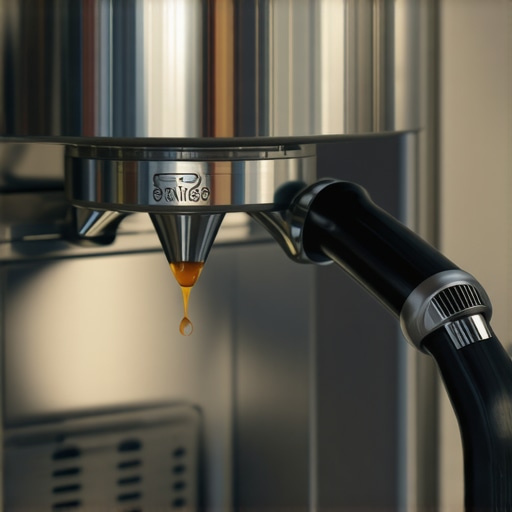
The Puck Prep Mistake That Causes Your Espresso to Spray Everywhere
Your espresso machine is essentially a high-precision pressure vessel designed to force water through a compressed bed of coffee at exactly nine bars of pressure. When that water finds a path of least resistance, it creates a high-velocity jet. We call this channeling. The result? A sticky, brown mess across your luxury kitchen backsplash and a shot that tastes like battery acid. After fifteen years of diagnosing extraction failures in high-end home setups, I can tell you the culprit isn’t your machine. It is a structural failure in the coffee puck itself, specifically the uneven distribution of density before the tamper even touches the grounds.
The Physics of Hydrostatic Resistance
Water is lazy. Under pressure, it will always seek the easiest route. If your coffee bed has microscopic gaps or areas of lower density, the water will converge there, widening the gap until it becomes a geyser. This isn’t just about how hard you press. It is about the internal architecture of the grounds. Most home baristas dump coffee from the grinder and immediately tamp. This leaves a mountain in the center and a valley at the edges. When you tamp that uneven pile, the center becomes hyper-compressed while the perimeter remains loose. The water slams into that loose perimeter, bypasses the coffee oils, and sprays out the sides of your bottomless portafilter.
Why Tamping Alone Cannot Fix Poor Distribution
You cannot compress your way out of a distribution problem. If the mass of coffee is not uniform across the horizontal plane of the basket, the tamper will simply move the entire uneven mass downward. Think of it like trying to level a pile of sand by putting a board on top and pushing. The high spots stay dense; the low spots stay thin. This structural imbalance is why many enthusiasts experience a clogged espresso portafilter basket on one side while the other side sprays. Precision is the only currency that matters here. Using a the precision scale that actually fits under a portafilter ensures your dose is consistent, but the physical arrangement of those particles determines the flow.
[IMAGE_PLACEHOLDER]
The Hidden Risk of Vertical Compression
The technical truth that most influencers ignore is the role of ‘fines migration.’ When you have uneven density, the smaller coffee particles (fines) move toward the bottom of the basket during the initial seconds of the shot. In a poorly prepped puck, these fines migrate unevenly, creating localized blockages. The pressure then builds up behind these blockages until the puck structurally fails, leading to the dreaded spray. You will hear the metallic snap of the portafilter locking in, but seconds later, you’ll hear the sizzling hiss of water escaping the puck. It’s a sign of a failed hydraulic seal.
The Implementation of WDT and Mechanical Leveling
To stop the spray, you must adopt the Weiss Distribution Technique (WDT). This involves using thin needles to stir the grounds, breaking up clumps and ensuring the density is identical from the center to the basket wall. Without this, even a $3,000 grinder will produce shots that channel. A common grinder setting error often compounds the issue; if the grind is too fine and clumped, the water will pierce through the gaps between the clumps rather than through the coffee itself. You are looking for a seamless, unified bed. Once the bed is level, you can focus on the silky microfoam for your latte, knowing the extraction is solid.
Market Shifts Toward High-Extraction Baskets
We are seeing a massive shift in the industry toward precision-machined baskets like those from VST or Pullman. These baskets have higher hole counts and tighter tolerances, which demand even better puck prep. As home espresso technology evolves over the next 24 months, the margin for error will shrink further. Standard, cheap baskets are forgiving because they are restrictive. Precision baskets are transparent; they show every flaw in your technique. If your prep is off, they will spray. If your prep is perfect, they yield sweetness and clarity that traditional baskets cannot touch. According to standards set by the Specialty Coffee Association (SCA), extraction yield is the primary metric for quality, and you cannot reach peak yield with a channeling puck.
The Executive Strategy for Perfect Extraction
If you are tired of cleaning espresso off your cabinets, stop focusing on how hard you tamp. Start focusing on how you distribute. My recommendation is a ‘Buy’ on high-quality WDT tools and calibrated tampers that ensure a level press every time. Ditch the ‘tamp and twist’ method; it’s an old-school habit that often unseats the puck from the basket wall, causing side-wall channeling. Place your portafilter on a stable surface, distribute with needles, and press straight down. Your goal is a puck that looks like a solid disk of dark chocolate with no visible fissures. References from the Coffee Science Foundation suggest that even a 5% variance in puck density can lead to a 20% drop in extraction quality. Precision is not an option; it is the requirement.
Frequently Asked Questions
Why does my espresso only spray at the end of the shot?
This is caused by the puck degrading as the soluble solids are washed away. If your prep is weak, the holes in the puck grow larger as the shot progresses, eventually leading to a spray as the structural integrity collapses.
Does the type of coffee bean affect the spraying?
Yes. Very fresh beans contain more CO2, which can cause turbulence during extraction. However, the root cause remains the prep; better distribution allows the gas to escape without blowing holes in the coffee bed.
Will a pressurized portafilter stop the spraying?
It will hide the symptom but not fix the problem. Pressurized baskets force the coffee through a single tiny hole to create artificial crema, which prevents spraying but sacrifices the complex flavor profile of true espresso.
Is a distribution tool better than WDT?
Spinning distribution tools only level the top layer of coffee. WDT (needles) manages the density throughout the entire depth of the basket, making it significantly more effective at preventing deep-seated channeling.