
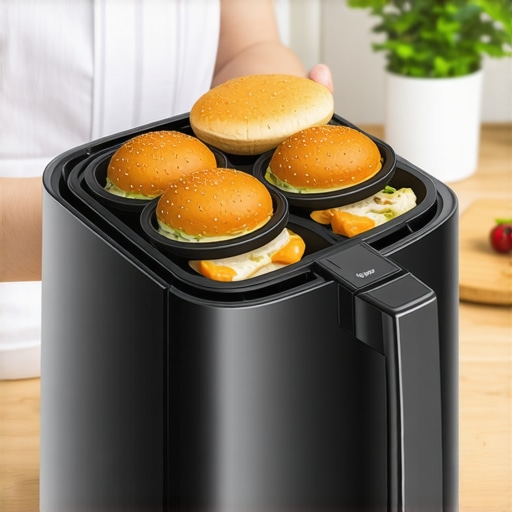
The Layering Trick for Even Air Fryer Cooking Without the Basket Shake
Most home cooks treat their high-end air fryers like a tumble dryer. They throw ingredients into the basket and shake them every five minutes. This habit is a technical failure. After fifteen years in the premium kitchen appliance industry, I have seen the mechanical toll this takes. It is inefficient. It is loud. The result? Thermal instability. When you yank that drawer open, the localized heat environment collapses. You lose 50 to 70 degrees in seconds. The heating element has to fight to recover. This cycle prevents the Maillard reaction from taking hold properly. Instead of a crisp exterior, you get a steamed, rubbery mess. The solution lies in Airflow Scaffolding. It is about geometry, not motion. By using stainless steel tiered racks, you maximize the boundary layer of hot air hitting every surface of the protein simultaneously. You eliminate the need for manual agitation. The meat stays still. The heat moves. That is the engineering reality of true convection.
The Physics of Boundary Layer Airflow
Air fryers are not fryers; they are high-velocity convection chambers. The fan must push air at a specific CFM (cubic feet per minute) to strip away the moisture envelope surrounding the food. When you stack chicken wings in a pile, the air cannot penetrate the center. You get raw spots. You get soggy skin. Shaking the basket merely re-orders the soggy spots. It does not fix the underlying distribution problem. If you want results that match a professional kitchen, you must prioritize verticality. Use a perforated rack system. This creates clear lanes for the air to travel. You want the air to wrap around the ingredient. Think of it as thermal immersion. Using the only way to get truly crispy skin in a basket air fryer involves respecting the space between the fibers. High-end units from brands like Breville or Ninja are designed for specific internal pressure. Disrupting that pressure by constantly opening the drawer leads to uneven browning. The fan also suffers. Aggressive shaking can misalign the drive shaft over time. This is the reason your air fryer fan is rattling. Stop the shake. Start the stack.
The Economic Cost of Thermal Recovery
Every time the basket leaves the unit, the wattage spikes. The machine works harder. This leads to component fatigue. In my experience, most mid-range air fryers fail because the thermal fuse or the heating element burns out from these constant power fluctuations. A technical truth that national retailers ignore: precision is more profitable than activity. If you layer your food using a ‘staggered grid,’ you reduce cooking time by up to 20%. You save energy. You prolong the life of the motor. It’s a simple ROI calculation. Many users complain about performance, but it is often why some air fryers cook unevenly—they are being choked by poor loading techniques. The air needs a path. If there is no path, the heat builds up in the corners, leading to scorched edges and cold centers. I have seen countless $400 appliances trashed because the owner thought the machine was broken, when in fact, the airflow was just blocked by a pile of frozen potatoes.
The Risks of High-Fat Proteins
Layering becomes a safety issue when dealing with high-fat items like bacon or ribeye. When you stack these, the rendered fat drips onto the lower layers. This doesn’t just make the bottom food soggy; it increases the smoke point risk. The localized temperature in an air fryer can reach 400 degrees. When fat hits that heating element, it atomizes. You get acrid smoke. By using a tiered layering system with a dedicated drip tray, you separate the fat from the heat source. This keeps the kitchen air clean. It keeps the flavor pure. I remember a client in a high-rise condo who set off her building’s fire suppression system because she was ‘shaking’ a basket full of fatty pork belly. The grease splattered onto the top coil. The result was an expensive mess. A simple stainless steel rack would have contained the oil and allowed the air to crisp the meat. This is about managing the mechanics of grease and wind.
Strategic Foresight for the Kitchen of 2025
We are moving toward a period where ‘Smart Convection’ will replace the manual basket design. We are seeing units with dual-axis fans and integrated sensors that map the density of the food. For the next 24 months, the best investment a home chef can make is not a new machine, but high-quality internal accessories. The industry is shifting away from deep baskets toward wider, shallower trays. This reflects the reality that surface area is king. If you are buying a new unit, look for one with multiple rack positions. Avoid the ‘bucket’ style if you value precision. The market is correcting its early design flaws. We are finally seeing appliances that prioritize the laminar flow of air over the convenience of a deep bin. Regulatory changes regarding energy efficiency will also make these high-recovery machines more expensive. Buy quality now. Use it correctly.
The Professional Recommendation
If you are serious about your luxury kitchen, stop the manual agitation. My verdict is clear: buy a set of high-grade 304 stainless steel stackable racks. Measure your basket dimensions. Ensure there is at least a half-inch gap between the rack edges and the basket walls. This gap is vital for air circulation. If you are cooking for a crowd, do not pile the food. Cook in layers or cook in batches. The quality of a single perfectly crisped batch beats a mountain of mediocre, unevenly cooked food every time. Trust the engineering. Let the fan do the work. Your motor, your electricity bill, and your palate will thank you.
Common Questions Regarding Airflow Management
Does parchment paper block the layering trick? Yes. Parchment paper acts as a thermal barrier. If you must use it, it must be perforated. Otherwise, you are effectively turning your air fryer into a regular oven, defeating the purpose of the high-velocity fan. Can I use silicone inserts for layering? Avoid them. Silicone has low thermal conductivity. It absorbs heat rather than reflecting it. Stainless steel is the only material that maintains the emissivity required for a true crisp. How do I clean the tiered racks? Use a high-alkaline degreaser or a soak in warm water with citric acid. Do not use abrasive pads on the air fryer basket itself, but the stainless racks can handle heavy scrubbing. This keeps your airflow channels clear of carbonized grease.