
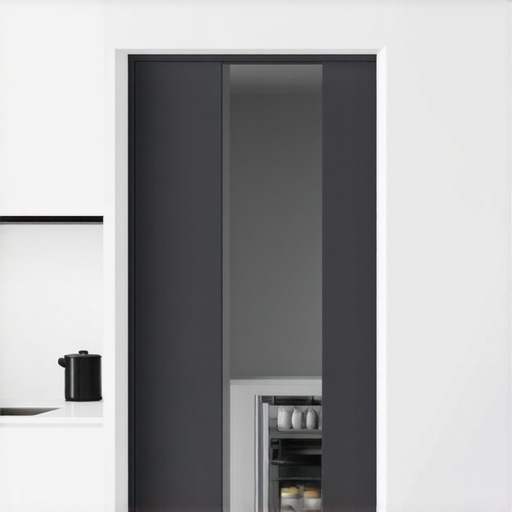
Why Pocket Doors Are the Best Way to Hide a Messy Scullery
Luxury kitchen design frequently suffers from a fundamental paradox: the desire for an open, minimalist aesthetic versus the gritty, high-heat reality of actual cooking. Your primary kitchen is for show. The scullery is for the work. I have spent 15 years advising high-net-worth clients on property value optimization, and the biggest mistake is failing to isolate the mess. A standard swinging door is a spatial parasite. It eats up three feet of clearance that could be used for extra cabinetry or a heavy-duty countertop. The solution is structural. By utilizing a pocket door system, you effectively delete the barrier between your workspace and your hosting space without sacrificing a single square inch of floor area. It is about spatial economics. Getting this wrong means your guests see the flour-dusted countertops and the stack of dirty bowls from the morning’s baking. That ruins the investment. The result? Avoidable failure.
The engineering of a high-end pocket door transcends basic framing. In a high-traffic scullery, where you are frequently moving between the main kitchen island and the prep zone, the hardware is the point of failure. Cheap, builder-grade nylon rollers will fail under the weight of a solid core door. You need a ball-bearing carriage system. Why? Because the weight of a 1.75-inch thick white oak door requires the structural integrity of heavy-gauge steel tracks. Many homeowners realize too late that the kitchen island mistake that makes your layout feel cramped is often exacerbated by doors that swing into the path of travel. Pocket doors slide into a recessed wall cavity, allowing for a 100% clear opening. This is vital when you are carrying a hot tray of sourdough or moving a heavy stand mixer from the scullery to the presentation area. We focus on the ROI of movement. Efficiency is the ultimate luxury.
There is a specific technical truth often missed by general contractors: wall rigidity. When you remove studs to create a pocket, you weaken the lateral stability of the wall. If you plan to hang heavy shelving for your premium cookware or mount a magnetic knife strip on that same wall, you must use LVL (Laminated Veneer Lumber) or steel-reinforced split studs. Without this, the wall will bow. The door will rub. You will hear that agonizing scrape of wood against drywall every time you try to hide the mess. According to standards set by the National Kitchen & Bath Association (NKBA), workflow is dictated by clear floor space. A pocket door maintains that clearance. When the scullery is in ‘production mode’ and the air fryer is venting steam, you can keep the door tucked away. When guests arrive, the door glides shut. The silence of a soft-close dampener is a sensory signal of quality.
We must address the clutter crisis. High-end kitchens are increasingly filled with specialized appliances like high-torque stand mixers and luxury espresso machines. These tools are indispensable but visually noisy. A scullery serves as a decompression chamber for your home. If your doorway creates a bottleneck, the the real reason your new kitchen feels cluttered is likely a failure in the transition zone. I have seen countless renovations where the homeowner spent $50,000 on cabinetry but ignored the door. A pocket door allows the scullery to be an extension of the kitchen during prep and a vault for the mess during the meal. The transition must be effortless. If you find your why most kitchen islands are actually too big for workflow, it is often because the surrounding circulation paths are blocked by swinging doors that conflict with cabinet drawers. A pocket door eliminates the conflict. It is a strategic correction.
Implementation carries risks, specifically regarding acoustics. A hollow wall is a drum. When the scullery is active with the sound of grinding coffee beans or the hum of an induction hob, the noise can bleed into the dining area. We mitigate this with sound-dampening insulation inside the pocket and brush seals along the door edges. This is the difference between a ‘renovation’ and ‘engineering.’ You must also ensure the door is perfectly plumb. If there is even a three-millimeter deviation, you will face the same frustration discussed in how to fix the uneven gap in your modern cabinet doors. Misalignment is a hallmark of amateur installation. The Architectural Woodwork Institute (AWI) emphasizes that high-performance openings must be tested for cycle counts. Do not settle for hardware that isn’t rated for at least 100,000 cycles.
Looking ahead 24 months, the ‘back kitchen’ or scullery will become a standard requirement for luxury residential resale. Buyers no longer want to see the mechanics of a meal. They want the magic. This shift toward ‘invisible architecture’ means that the door itself should disappear when not in use. We are seeing a move toward oversized pocket doors that act as movable walls, allowing the scullery to open fully to the main kitchen for large-scale catering. This is not a trend; it is a market correction toward functional utility. My recommendation is clear: if you are renovating or building a high-end kitchen, the scullery must be accessible yet totally concealable. Invest in the pocket. Buy the heavy-duty track. Avoid the swing. If you are in a tight urban footprint, this is non-negotiable. If you have a sprawling estate, it is about the refinement of the guest experience.
Why should I use a pocket door instead of a sliding barn door?
Barn doors sit on the outside of the wall, meaning you cannot place furniture or art against that wall space. They also have poor light and sound sealing compared to a pocket door, which is contained within the wall and can be fitted with integrated gaskets for a better seal.
Will a pocket door track get filled with dust and debris?
Modern top-hung pocket door systems do not use a floor track. The floor remains clear and continuous, preventing the buildup of dirt and ensuring a seamless transition between the kitchen and scullery floors. A small, floor-mounted guide hidden at the pocket entrance keeps the door aligned.
Can I install a pocket door in an existing load-bearing wall?
Yes, but it requires a structural header. Because you are essentially creating a wide opening in the framing, a structural engineer or experienced contractor must size an LVL header to carry the load above the door. It is a more complex install but entirely feasible during a remodel.
What happens if the internal hardware breaks?
High-quality pocket door kits are designed with ‘removable’ tracks that can be detached without tearing down the drywall. Always ensure your installer uses a professional-grade kit like those from Johnson or Hafele that allows for post-installation adjustment and hardware replacement.