
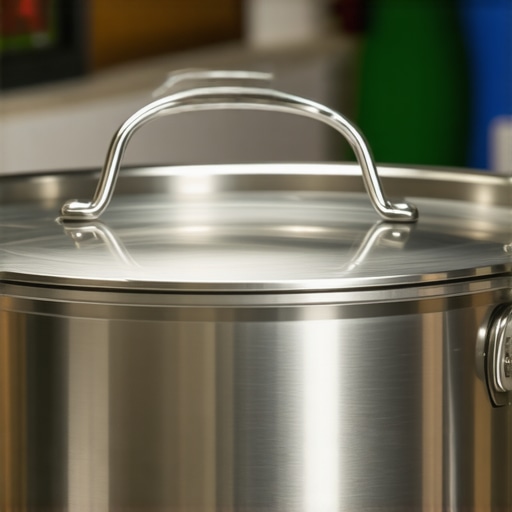
Why 5-Ply Cladding Matters More Than the Brand Name on Your Pots
Buying a piece of premium cookware based solely on the brand name is a tactical error. I have spent the last 15 years in the luxury kitchen industry, tearing down equipment and watching heritage brands coast on reputations built in the 1970s. The logo on the handle does not conduct heat. The metallurgical structure of the vessel does. If you are investing $300 in a single skillet, you are paying for thermal management, not a status symbol. The stakes are simple: inferior pans create hot spots that break delicate sauces, warp under high-intensity induction heat, and fail to provide the sear necessary for Maillard-reaction-heavy proteins. When you move beyond entry-level tools to the real difference between 3-ply and 5-ply premium cookware, you are moving from mere cooking to engineering a consistent culinary outcome.
The Engineering Reality of Thermal Diffusion
Traditional 3-ply construction uses an aluminum core sandwiched between two layers of stainless steel. It is the industry standard. It is also insufficient for modern, high-torque cooking environments. A 5-ply vessel adds additional layers—usually alternating aluminum and stainless steel—to increase the total thermal mass and improve lateral heat distribution. This prevents the ‘bullseye effect’ where the center of the pan is 50 degrees hotter than the edges. In my experience, a 5-ply pan allows for a more forgiving window of error. The heat moves slower but more evenly. This is particularly vital when you are utilizing high-output copper core pans that offer the responsiveness of copper with the durability of steel. You aren’t just buying metal; you are buying a heat-soak that prevents your garlic from scorching the moment you look away.
The Stress Test: Where Cheap ‘Luxury’ Fails
I have seen $500 pans delaminate at the rim because the manufacturer used a ‘poured’ bottom rather than full cladding. True 5-ply cladding extends from the base all the way up the sidewalls. This is non-negotiable. Without it, the temperature drop at the curve of the pan causes liquids to stick and carbonize. I remember a specific client—a professional chef who outfitted his home with a famous ‘designer’ brand. Within three months, his induction hob had literally bowed the centers of the pans. The reason? The magnetic steel layer was too thin to handle the rapid thermal expansion. He was left with a kitchen full of expensive rockers. Furthermore, high-heat searing often leads to the real reason your stainless steel pan has rainbow stains after cooking, which is a structural oxidation that affects thinner metals much faster than heavy-duty 5-ply builds. You want a pan that feels heavy, sounds solid when struck, and maintains its plane under stress.
Market Corrections and the Induction Shift
The next 24 months will see a massive shift in how premium cookware is marketed, primarily driven by the global transition to induction hobs. Many ‘legacy’ pans that worked beautifully on gas are fundamentally incompatible with high-wattage induction. They lack the ferritic stainless steel density required to engage the magnetic field efficiently. If your pan hums or vibrates on an induction burner, it is likely a 3-ply vessel struggling with the frequency. We are seeing a move toward 7-ply and hybrid materials, but for the vast majority of high-end home kitchens, 5-ply remains the sweet spot for ROI. It provides enough weight to prevent ‘walking’ on the glass surface while maintaining enough responsiveness for delicate tasks like tempering chocolate or reducing a demi-glace. However, be wary of why expensive copper pans fail on induction; if that 5-ply stack doesn’t have the correct external magnetic grade, it is a paperweight on a modern cooktop.
The Executive Verdict
My recommendation is clear: ignore the marketing spend and the celebrity endorsements. Look at the specification sheet. If a brand refuses to disclose the thickness of its internal aluminum or copper layers, they are hiding a cost-cutting measure. Buy 5-ply for your skillets, sauciers, and sauté pans where temperature control is paramount. For stockpots where you are only boiling water, 3-ply is a rational place to save budget. The goal is a balanced kit where the metal matches the task. If you are using high-output equipment like stand mixers or pro-grade espresso machines, your cookware should match that level of industrial integrity. Stop collecting logos. Start collecting thermal mass.
Frequently Asked Questions
Is 5-ply harder to clean than 3-ply?
No. The surface material is still usually 18/10 stainless steel. The cleaning process remains the same, though the extra weight makes it more cumbersome to maneuver in a sink.
Does 5-ply take longer to heat up?
Yes. Because there is more metal to saturate, the pre-heat time is longer. This is the trade-off for superior heat retention and stability.
Can I use 5-ply on a gas stove?
Absolutely. While 5-ply excels on induction, its lateral heat distribution is actually a massive benefit on gas, where the flame often concentrates heat in a ring pattern.
Is 7-ply worth the extra cost?
Rarely. For most home and even professional applications, the performance gain from 5 to 7 layers is marginal and often results in a pan that is too heavy for comfortable one-handed use.