
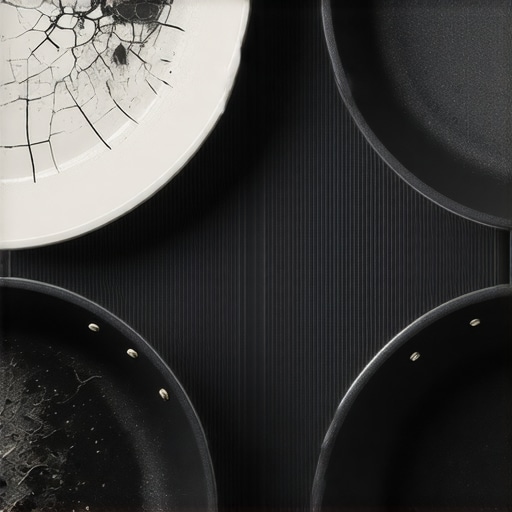
Why Ceramic Coatings Fail Faster Than Traditional Non-Stick
The culinary industry has been sold a lie packaged in pastel colors and ‘eco-friendly’ branding. Ceramic cookware is not ceramic in the way a kiln-fired plate is; it is a sol-gel coating based on silica. After a decade of testing premium cookware and seeing thousands of returns, the technical truth is undeniable. Ceramic fails because it is chemically incapable of the elastic recovery found in PTFE-based pans. You are buying a product designed for a short lifecycle while being promised a generational shift in kitchen technology. The financial drain of replacing these pans every six to nine months outweighs any perceived health benefit for most households. If you want a tool that survives more than two hundred thermal cycles, the current iteration of ceramic is a liability.
The Failure of Rigid Silica
Traditional non-stick surfaces, specifically those using fluoropolymers, behave like a flexible skin. When you heat a pan, the metal substrate expands. PTFE is resilient enough to stretch alongside that metal. Ceramic coatings are different. They are sintered glass. Silica is inherently brittle. Every time you turn the burner to medium-high, the aluminum or steel base expands, but the ceramic coating resists. This creates microscopic fractures—crazing—that the naked eye cannot see initially. Food particles and carbonized oils lodge into these cracks, creating a permanent bond that destroys the non-stick property. If you have noticed why ceramic non-stick pans lose their slide after six months, this structural mismatch is the culprit. The material science dictates the expiration date.
Thermal Conductivity and the Sear Trap
Consumers often try to treat ceramic like cast iron. It is a mistake. Ceramic is an insulator, not a conductor. When you attempt how to get the best sear using a ceramic non-stick pan, you likely push the temperature past the coating’s stability point. While ceramic can technically withstand higher temperatures than PTFE without releasing fumes, the actual non-stick proteins (the ‘slippery’ part) degrade at surprisingly low thresholds. Once you cross the 450-degree mark, the surface undergoes a permanent chemical change. It becomes a magnet for proteins. The smell of scorched oil becomes a permanent fixture of the pan. Traditional pans tolerate these errors better; ceramic is unforgiving of a single high-heat incident.
The Myth of Hardness
Marketing departments love to talk about the ‘diamond-infused’ hardness of ceramic. Hardness is not durability. A diamond is hard, but it will shatter under a hammer blow. Ceramic coatings are susceptible to impact damage from other pans or even high-pressure water jets. We often see ‘chipping’ at the rim where the lid sits. This isn’t just an aesthetic issue. Once the seal is broken, moisture gets under the sol-gel layer, leading to delamination. This is why the real difference between 3-ply and 5-ply premium cookware matters; a more stable base reduces the flex that kills ceramic. However, even the best 5-ply base cannot fix the inherent brittleness of a silica layer. You are essentially cooking on a thin sheet of glass that is trying to peel itself off the metal.
Operational Risks in the Modern Kitchen
I have stood in professional kitchens where a ceramic pan lasted exactly four shifts. The ‘clank’ of a stainless spoon or the weight of industrial-grade steel tongs is enough to create focal points of failure. In a home environment, the risks are more subtle but equally lethal. Dishwashers are the primary executioners. The high-alkalinity detergents used in modern pods literally eat the silica binder. You might think hand-washing is the savior, but even then, the abrasive nature of some ‘non-scratch’ sponges is enough to level the microscopic peaks that provide the release. For those seeking longevity, why pro chefs still use heavy carbon steel skillets becomes obvious. Carbon steel builds a renewable layer; ceramic is a depleting asset from the moment it leaves the factory.
Market Corrections and Regulatory Shifts
The push toward ‘PFAS-free’ kitchens is driving this market, yet the technology is immature. The European Chemicals Agency (ECHA) and the EPA are tightening restrictions, but the industry has reacted with a stop-gap solution rather than a superior one. In the next 24 months, expect to see ‘hybrid’ coatings that attempt to blend the flexibility of polymers with the hardness of ceramics. Until then, we are in a transitional phase where the consumer is the test subject. The secondary effect of this shift is a massive increase in landfill waste, as ceramic pans are rarely recycled effectively due to the bonded nature of the coating to the aluminum base. It is a ‘green’ solution with a massive carbon footprint of replacement and disposal.
The Executive Verdict
Stop buying ceramic pans for everyday high-heat cooking. It is a strategic error. If you must have one, keep it strictly for low-temperature egg work or delicate fish. For everything else, invest in seasoned carbon steel or high-quality stainless steel. If you are in a position where you demand longevity and performance, do not let a ‘Green’ label dictate your equipment list. The ROI on a $150 stainless skillet that lasts thirty years is infinitely higher than a $50 ceramic pan that dies in six months. My recommendation is a ‘Hold’ on ceramic for general use and a ‘Buy’ on traditional materials that utilize physics rather than marketing-grade chemistry.
Frequently Asked Questions
Can I fix a ceramic pan that has started sticking?
No. Once the silica surface is crazed or the non-stick proteins have carbonized into the pores, it cannot be ‘re-seasoned’ like cast iron. You can try a deep clean with baking soda, but the release properties are likely gone forever.
Why does my ceramic pan look clean but still sticks?
The buildup of microscopic oil layers, known as ‘varnishing,’ fills the texture of the pan. Even if it looks white and pristine, that invisible layer of burnt fat acts like glue.
Is ceramic actually safer than PTFE?
Technically, ceramic does not contain PFOA or PFAS. However, the environmental cost of manufacturing and the frequent replacement cycles create a different kind of ecological impact. Safety in the kitchen is better managed through proper temperature control regardless of the pan type.