
The Grinder Setting Error That Makes Your Coffee Taste Like Paper
Most enthusiasts blame their Hario V60 filters or the bleached pulp of their Chemex papers when a cup tastes like a wet cardboard box. They are wrong. After 15 years in the trenches of the premium coffee industry, diagnosing thousands of extraction profiles, the technical truth is stark: your grinder is producing too many fines. These microscopic particles clog the filter bed, causing a phenomenon known as hydraulic stall. When water cannot pass through the bed at the intended rate, it sits. It stagnates. It leaches the cellulose flavors from the paper itself. The error is not the paper. The error is your particle size distribution.
The Mechanics of Hydraulic Resistance
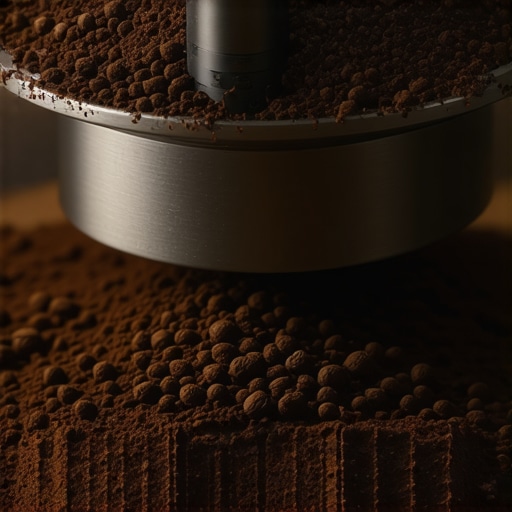
Grinding coffee is not about making ‘small pieces’; it is about managing a distribution curve. Every grinder produces a range of sizes. The ‘Technical Purist’ view demands a unimodal distribution, where most particles are the exact same micron size. Cheap grinders, or even high-end units with misaligned burrs, produce a bimodal or even multimodal spread. These fines migrate to the bottom of the filter. They create an impermeable layer. The result? Total extraction failure. This is why stopping your grinder from creating static is often the first step in managing that distribution, as static causes fines to clump and drop unevenly. According to the Specialty Coffee Association (SCA) brewing standards, an ideal extraction yield sits between 18% and 22%, but once your brew time exceeds the four-minute mark due to clogging, you are into the territory of over-extraction and paper-taint.
Expensive machines are not immune to this. In fact, they are often more sensitive. You buy a prosumer espresso machine and a flat-burr grinder, yet your pour-over remains bitter and papery. Why? Because you are likely using a grinder designed for high-clarity espresso on a medium-coarse setting where it lacks the stability to prevent ‘shattering’ the bean. I have seen owners of $3,000 setups produce worse coffee than a barista with a hand grinder because they ignored the burr geometry. You need to understand why expensive grinders still clump and how that impacts the final cup profile. If the bed looks like mud once the water drains, you have already lost the battle. The smell of wet earth and the weight of the sodden filter are the sensory markers of this specific failure.
The Reality of Implementation Risks
Correcting this is not a simple matter of turning the dial to ‘Coarse.’ If you go too far, you hit under-extraction—sour, thin, and watery. The real challenge is burr alignment. Even a two-degree tilt in a 64mm flat burr set will create a massive variance in particle size. This is where the ‘operational scars’ come in. I once spent six hours shimming a customer’s EK43 grinder with aluminum foil just to eliminate a persistent papery finish in their light-roast Kenyan brew. It was not the paper. It was the burrs. This is why learning the correct way to clean burrs without losing your settings is fundamental for any serious home setup. If you move the collar without a reference point, you are reset to zero, guessing through pounds of expensive beans. You must also consider the thermal expansion of the burrs during back-to-back grinding. High-volume home use generates heat. Heat changes the gap. The gap changes the taste.
Future Grinding Architectures
The industry is moving toward active particle analysis. Within the next 18 to 24 months, we will see consumer-grade grinders using optical sensors to adjust burr distance in real-time. This isn’t just a gadget; it is a solution to the atmospheric shifts that currently ruin your morning brew. Regulatory changes in energy efficiency are also forcing manufacturers to move toward high-torque DC motors, which provide a more consistent RPM under load than traditional AC motors. This matters because a fluctuating motor speed creates inconsistent particle sizes. The ‘Technical Purist’ knows that RPM stability is as vital as burr sharpness. If your motor bogs down, your coffee tastes like paper.
The Executive Verdict
If your coffee tastes like paper, do not switch filter brands yet. First, check your brew time. If a standard 300ml pour-over takes longer than three minutes and thirty seconds, your grind is the culprit. Second, look at your spent bed. If it looks like silt rather than coarse sand, your burrs are either dull or misaligned. My recommendation: Stop chasing the ‘coarse’ setting and start focusing on grind uniformity. Invest in a sifter to remove fines if your grinder is sub-par. If you are serious about luxury kitchen performance, your grinder should cost as much as your coffee machine. Anything less is a bottleneck. Check the best temperature for brewing light roast beans to ensure you aren’t compounding the extraction issues with excessive heat.
Frequently Asked Questions
Does rinsing the paper filter help? While rinsing removes some loose fibers, it cannot overcome the over-extraction caused by fines clogging the pores. It is a secondary fix for a primary mechanical problem.
Why does my grinder produce more fines with certain beans? Brittle, light-roast beans shatter more easily than oily dark roasts. They require a more stable burr set to maintain a consistent micron size without producing dust.
How often should I align my burrs? For home use, a check every six months is standard. If you notice a sudden shift in brew time despite using the same settings, alignment is the first variable to investigate.
Will a more expensive grinder solve this? Not necessarily. A poorly maintained expensive grinder is worse than a well-calibrated mid-range unit. Focus on calibration and cleaning first.