
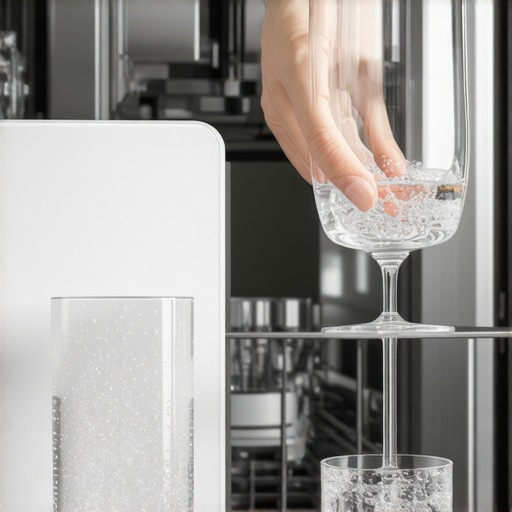
Why Most Dishwashers Leave Glasses Cloudy and the Rinse Fix
Cloudy glassware is the silent tax on the luxury kitchen. After 15 years of diagnosing high-end appliance failures, I have realized homeowners blame the machine for what is actually a failure of fluid chemistry and molecular physics. Your $4,000 dishwasher isn’t broken. It is likely being outmatched by the Total Dissolved Solids (TDS) in your local water supply. We are seeing a trend where even the most advanced filtration systems fail because the user ignores the interaction between surfactants and calcium carbonate. The result? Avoidable failure. When you see a white haze, you are looking at either etching or mineral deposits. One is a surface buildup; the other is permanent structural damage to the glass. Ignoring this doesn’t just ruin your stemware. It signals a broader issue with your home’s water management that eventually impacts every heating element in your kitchen.
The Molecular Reality of Hard Water Deposits
Calcium and magnesium ions are the primary architects of the cloudy film. When water evaporates during the high-heat drying cycle, these minerals stay behind. They bond to the silica in the glass. This is why standard detergents often fail. They lack the chelation power to keep these minerals in suspension. If you are noticing similar issues with other appliances, you might find that how hard water quietly destroys your multi-boiler espresso machine follows the same destructive path. The heat accelerates the precipitation of scale. In a dishwasher, this process happens across the entire surface of your expensive crystal. The chemistry is unforgiving. Without a proper acidic rinse aid to lower the pH during the final stage, the alkalinity of the detergent remains on the surface. This creates a prime environment for ‘calcium filming.’
Etching Is the Permanent Threat
Not all clouds are deposits. Etching is the microscopic scratching of the glass surface caused by overly soft water or excessive detergent. It is a paradox. You use more soap to get things cleaner, but the phosphates (or their modern substitutes) strip the ions directly from the glass structure. You can’t scrub etching away. It is a physical change in the material. This is a common operational risk in homes with aggressive whole-house softeners. Finding the balance between mineral suspension and surface preservation requires precision. Much like how why your espresso machine needs a dedicated water softener, your dishwasher requires a specific ion-exchange environment to function without eating the dishes. The smell of hot, wet minerals during a cycle is your first warning. The weight of the glass might even feel slightly different as the surface integrity degrades over hundreds of cycles.
[IMAGE_PLACEHOLDER]
The Hydrodynamic Solution and Surfactant Mechanics
The fix is not more detergent. It is the tactical use of rinse aids. These are not just ‘drying agents.’ They are surfactants that lower the surface tension of the water. Instead of forming droplets that cling and dry into spots, the water sheets off. This is critical in modern high-efficiency machines that use less water and lower temperatures. If the water doesn’t sheet, the minerals concentrate. For those dealing with heavy organic buildup or grease alongside minerals, understanding the only way to clean a burnt air fryer fryer basket without scrubbing can provide insight into how surfactants break bonds without physical abrasion. In the dishwasher, the rinse aid is injected at the exact moment the TDS concentration is at its highest in the final rinse. This timing is the difference between a crystal-clear finish and a muddy haze.
The Industry Shift Toward Water Precision
We are entering an era where appliances will likely include built-in TDS sensors that adjust detergent dosing in real-time. According to the Association of Home Appliance Manufacturers (AHAM), water efficiency mandates are forcing manufacturers to rely more on chemical engineering than raw water volume. This means the margin for error is shrinking. If your water hardness changes by even 3 grains per gallon, your current settings will fail. We are also seeing a rise in ‘phosphate-free’ residue issues. These eco-friendly formulas require a much more robust rinse cycle to prevent filming. Within the next 24 months, I expect more luxury brands to integrate dedicated softening salts directly into the sump, a feature once reserved only for European imports. This mechanical correction bypasses the variability of local municipality water treatment.
The Executive Verdict
Stop over-dosing your detergent. If you have soft water, use half the recommended amount. If you have hard water, you must use a rinse aid containing citric acid or a similar chelating agent. For those in high-mineral areas, the only strategic move is a dedicated ion-exchange softener for the appliance or the whole home. Test your water. If the cloudiness disappears after soaking the glass in white vinegar, it is a mineral deposit. If it stays, it is etching. The former is a maintenance task; the latter is a signal to change your habits immediately. Invest in high-surfactant additives today to protect the long-term value of your kitchen assets.
Frequently Asked Questions
Q: Can I use vinegar instead of commercial rinse aid?
A: No. While vinegar is acidic, the acetic acid can degrade the rubber gaskets and seals in a high-end dishwasher over time. Stick to formulated rinse aids designed for appliance longevity.
Q: Why does the cloudiness only happen on the top rack?
A: This is usually due to spray arm geometry or lower water pressure at the top. The minerals have more time to settle as the water drains slower from the upper levels.
Q: Does the ‘Sanitize’ cycle make clouding worse?
A: Yes. Extreme heat can bake mineral deposits onto the glass surface, making them much harder to remove later. Only use Sanitize when necessary for hygiene, not for every load.