
The Only Way to Clean a Burnt Air Fryer Basket Without Scrubbing
Scrubbing is a death sentence for high-end kitchen equipment. After fifteen years in the premium appliance industry, I have seen thousands of dollars in high-performance baskets ruined by abrasive pads and ‘elbow grease.’ When food carbonizes against a basket, it forms a molecular bond with the coating. Tearing that bond away with force doesn’t just remove the carbon. It removes the substrate. The result? Permanent damage and a basket that sticks forever. We need to stop treating air fryers like cast iron pans. They are precision-engineered thermal tools.
The science of cleaning a burnt air fryer basket relies on hydrolysis and surfactant saturation, not friction. Most home cooks reach for the green scrubby side of a sponge the moment they see black residue. This is a mistake. The carbonized grease is essentially a polymer now. To break it, you must use latent heat and chemical softening. If you are using zirconium-coated pans for 2026, you already understand that surface integrity is everything. The same logic applies to your air fryer basket. You want to lift the soil, not grind it down.
The Thermal Saturation Method
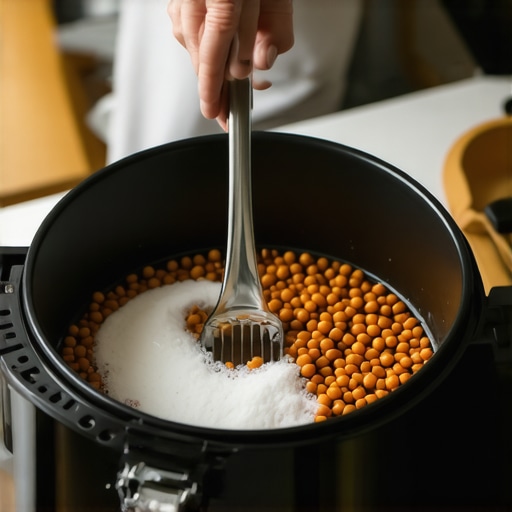
Forget the abrasive chemicals. They are overkill and often toxic. Instead, utilize the machine’s own heating element. Fill the basket with hot water and a high-concentration grease-cutting dish soap. Do not use dishwasher detergent; the pH is often too high for aluminum-based baskets. Place the basket back into the unit and run it at 375 degrees for five minutes. This creates a pressurized steam environment inside the drawer. The heat expands the metal slightly, allowing the soapy water to penetrate the microscopic fissures in the burnt-on grease. It is a simple matter of physics. The steam does the work that your muscles cannot.
Once the cycle finishes, let it sit. Do not open it immediately. You want that residual heat to keep the surfactants active. If you have been struggling with how to stop your air fryer from smelling like old oil, this steam treatment is the solution. It reaches the heating element housing where aerosolized fats often hide. After twenty minutes, the burnt residue will have transformed from a hard shell into a soft, gelatinous slurry. You can literally pour it out. A soft microfiber cloth is all you need for the final wipe.
The Risk of Coating Failure
Why avoid the scrub? Most modern baskets utilize a PTFE or ceramic-based coating. These layers are remarkably thin. Every time you use an abrasive, you create micro-scratches. These scratches are the perfect anchor points for the next round of burnt-on chicken fat. It becomes a cycle of escalating failure. Eventually, the coating flakes off into your food. This is the ‘operational scar’ of many home cooks. They think they are being thorough. In reality, they are accelerating the appliance’s obsolescence. According to the Association of Home Appliance Manufacturers (AHAM), improper maintenance is the leading cause of premature appliance replacement in the United States.
When the coating fails, the bare metal underneath—usually aluminum—is exposed to acidic fats and salts. This leads to oxidation. You will see it as grey or white powdery spots. Once you reach this stage, the basket is a loss. There is no ‘seasoning’ an air fryer basket like you would a carbon steel skillet. If you want a long-term solution, consider moving toward stainless steel air fryers that won’t leach chemicals. They handle aggressive cleaning better, though the steam method remains the gold standard for efficiency.
Industry Trends and Regulatory Shifts
The landscape of non-stick technology is shifting. By 2026, we expect tighter regulations on PFAS chemicals globally. This means the ‘easy-clean’ coatings of the past are being replaced by more sensitive, eco-friendly alternatives. These new surfaces are even less tolerant of scrubbing. As a business owner, I advise clients to invest in cleaning protocols that preserve the gear. The cost of a replacement basket for a premium unit can often reach forty percent of the original purchase price. That is a poor return on investment. Efficient maintenance is an economic strategy.
The Executive Verdict
If your basket is currently covered in black, carbonized gunk, do not reach for the steel wool. Hold. Start the steam cycle. Use heat as your primary tool. If the residue persists after one round, repeat the process. It is better to spend thirty minutes of passive waiting than five minutes of active destruction. For those in high-volume kitchens or households that air fry daily, this protocol should be performed weekly to prevent build-up. Prevention is cheaper than a cure. Always.
Common Maintenance Questions
Can I use baking soda and vinegar?
No. The reaction between the two is mostly theatrical. The salt produced can actually be abrasive to the coating. Stick to high-quality dish soap and steam.
What if the residue is on the heating element?
Turn the unit upside down once cool. Use a soft brush with a small amount of degreaser. Never submerge the unit. Use the steam method mentioned above to loosen the grime first.
Is the dishwasher safe for baskets?
Even if the manual says ‘dishwasher safe,’ the high-heat drying cycle and aggressive detergents will degrade the non-stick coating over time. Hand-washing using the steam method is the only way to ensure a five-year lifespan.
How do I know if the coating is compromised?
Look for a change in texture or ‘dull’ patches. If food starts sticking in specific spots despite proper oiling, the polymer layer has likely been stripped away.