
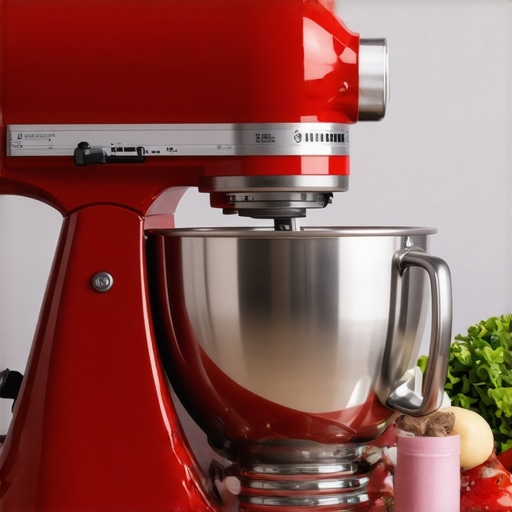
5 Stand Mixer Mistakes That Shorten the Motor Life
Most homeowners view a high-end stand mixer as a permanent kitchen fixture. It is not. After fifteen years of diagnosing burnt-out stators and stripped nylon gears in luxury kitchen environments, I can tell you that the lifespan of your appliance is dictated by your understanding of torque, not just the brand on the label. High-performance machinery requires an understanding of mechanical load. Treat a precision instrument like a blunt hammer, and you will find yourself shopping for a replacement long before the warranty period expires. The financial stake is clear: $600 to $1,500 down the drain because of simple operational negligence.
The Physics of Planetary Gear Failure
To understand why these machines fail, you have to look at the gear train. Most consumer and semi-pro units utilize a planetary gear system. This design allows the attachment to rotate while simultaneously orbiting the bowl. It is efficient but creates massive internal friction under load. When you increase the resistance—by using too much flour or cold butter—the motor attempts to maintain its RPM by drawing more current. This generates heat. If that heat cannot dissipate, the insulation on the motor windings begins to degrade. The result? A short circuit and a dead machine. The smells of ozone and burning copper are the first signs of a catastrophic failure. I have seen countless units where the internal thermal fuse didn’t trip fast enough to save the windings.
Overloading the Mixing Bowl
The most frequent error is ignoring the difference between bowl capacity and motor capacity. Just because a bowl holds seven quarts does not mean the motor can handle seven quarts of heavy sourdough. Dense hydration levels create immense drag. When the motor struggles, the drive shaft flexes. This misalignment leads to uneven gear wear. In many cases, why bread dough climbs the hook is a symptom of using the wrong speed for the hydration level, which forces the motor to work against the weight of the dough climbing into the hub. This creates a vertical load the bearings were never designed to handle.
Neglecting the Dime Test
Precision is everything in a luxury kitchen. If your beater is set too high, you leave a layer of unmixed ingredients. If it is too low, it strikes the bottom of the stainless steel. This metal-on-metal contact sends vibrations back through the entire drivetrain. Over time, these micro-shocks loosen the internal housing screws and chip the enamel on your attachments. I always recommend the simple dime test that stops your stand mixer from chipping the bowl. It is a three-minute calibration that saves the transmission from unnecessary stress. A misaligned head is the leading cause of ‘walking’ mixers, where the unit moves across the counter during operation.
High Speed Kneading Errors
Speed is the enemy of torque. Many users think that turning the dial to 6 or 8 will finish the dough faster. In reality, most manufacturers explicitly state that dough should never be kneaded above speed 2. High speeds with heavy loads cause the centrifugal force to throw the internal grease away from the gears. Without lubrication, the friction increases exponentially. You might notice why your stand mixer smells like burning plastic during heavy kneading; that is often the nylon ‘sacrificial’ gear melting. Designers put that gear there so it breaks before the motor does, but replacing it is still a labor-intensive repair that most owners want to avoid.
Ignoring Thermal Recovery Times
Industrial motors have duty cycles. Consumer mixers do too, though they are rarely advertised. If you are running back-to-back batches of heavy cookies or bread, the internal temperature climbs steadily. Without a cooling period, the grease thins out and loses its viscosity. For those doing serious production, I suggest looking into 7 liquid-cooled stand mixers for heavy sourdough prep 2026. These units are designed for the heat of a pro-sumer environment. Most standard air-cooled units need at least 20 minutes of rest after 10 minutes of heavy use. Ignoring this reality is the fastest way to cook the armature.
The Engineering Reality of 2026
We are seeing a shift in the industry toward DC motors. Unlike traditional AC motors, DC versions provide high torque at low speeds without the same level of heat generation. They are quieter and more durable. However, they come with complex electronic control boards that are sensitive to power surges. In the next 12 months, expect more manufacturers to integrate sensors that automatically shut the machine down when it detects a high-torque threshold. This tech will protect the motor but might frustrate cooks who are used to pushing their machines to the limit. We are also seeing a push toward all-metal gearboxes, moving away from the plastic gears that defined the last decade of mid-tier appliances.
The Executive Verdict
If you own a premium stand mixer, stop treating it like a basic hand tool. Calibrate the bowl height annually. Respect the speed limits for dough. Let the motor breathe between batches. If you are mixing for a large family or a side business, upgrade to a commercial-grade unit with a high-wattage DC motor. The upfront cost is higher, but the cost-per-use drops significantly when the machine lasts twenty years instead of four. My recommendation: buy for the torque, not the color.
Frequently Asked Questions
How do I know if my motor is already damaged?
Listen for a high-pitched whining or a rhythmic clicking. If the machine loses power under a load it used to handle easily, the brushes or the capacitor are likely failing.
Is it okay to use 3rd party attachments?
Only if they meet the weight specifications of the original manufacturer. Heavy steel attachments from third parties can put a strain on the front power hub that leads to internal housing cracks.
Why does my mixer get hot even with light batters?
Check the vents. Dust and flour buildup can clog the intake, preventing the fan from pulling cool air over the motor windings. Use a vacuum or compressed air to clear the paths.