
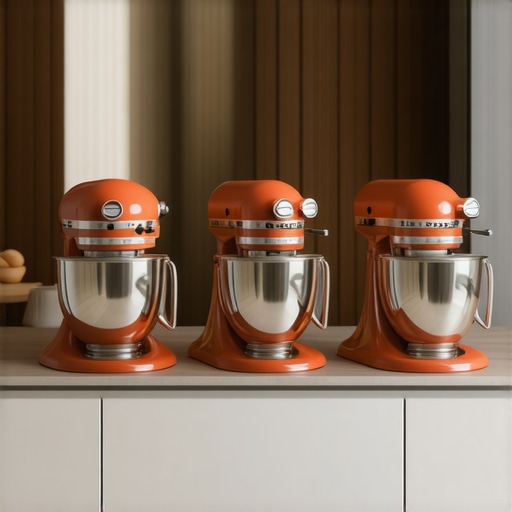
3 Compact Stand Mixers for Small Luxury Apartments
Space in high-end urban real estate is the ultimate premium. You own a three-million-dollar condo with a kitchen designed by a starchitect, yet your counter depth is sacrificed for a waterfall edge. When you try to fit a commercial-grade appliance into these tight dimensions, you hit a wall. Most people buy for aesthetics. They choose the color that matches their backsplash. That is a mistake. After twenty years in the high-end appliance sector, I have seen hundreds of compact units burn out because owners treated them like industrial workhorses. A smaller footprint usually means a smaller motor with less heat dissipation. The physics of torque do not care about your interior design. If the motor cannot breathe, it dies. The result? Avoidable failure.
The Mechanical Reality of Reduced Footprints
Engineering a compact mixer requires high-density components. Most consumer brands cut corners by swapping steel for nylon in the gear train to save space and cost. This is unacceptable. In a luxury environment, you need a DC permanent magnet motor. These motors provide high torque at low speeds without the bulk of traditional AC induction motors. When you are kneading a stiff sourdough in a confined space, you need that low-end power. I have disassembled machines where the gears looked like they had been through a woodchipper because the user attempted a double batch of bagels in a five-quart tilt-head. If you want durability, you must prioritize the gear material over the chrome finish. Many metal gear stand mixers are now being engineered specifically for these smaller silhouettes, ensuring that the machine does not strip its internals the moment the dough provides resistance.
The Engineering Gap in Small Scale Design
We need to talk about planetary action. In a smaller bowl, the path of the beater is more constrained. If the geometry is off by even a millimeter, you get dead zones. I have seen mixers that leave a layer of unmixed flour at the bottom of the bowl, forcing the user to stop and scrape constantly. That is a failure of design. High-end compact mixers utilize a tighter planetary ratio to ensure 60+ touchpoints per rotation. It is about precision, not just raw power. Furthermore, heat is the silent killer. In a small apartment, ambient temperatures rise quickly when the oven is on. If your mixer lacks a thermal cut-off switch or adequate venting, the internal lubricants will liquify and leak into your food. I’ve smelled the burning plastic smell from a struggling motor more times than I can count. It is the scent of a bad investment.
The Small Footprint Risk Assessment
What breaks first? The hinge. On tilt-head models designed for small spaces, the locking pin often lacks the gauge thickness to handle the upward force of heavy dough. The head begins to bounce. This vibration transfers to your quartzite or marble countertop. Over time, that micro-vibration can contribute to hairline fractures in the stone if the mixer is not properly dampened. I prefer bowl-lift designs even in small formats, though they are rare. If you must go with a tilt-head, look for a unit with a weight-to-power ratio that exceeds 2.5 lbs per quart of capacity. Stability is non-negotiable. I once saw a lightweight ‘designer’ mixer vibrate itself right off a kitchen island because the base lacked the mass to counter the centrifugal force of a heavy hook. The mess was spectacular; the repair bill for the floor was even worse. This is why brushless motor stand mixers are becoming the standard for luxury apartments; they offer the necessary weight and quiet operation without the bulk.
Market Shifts and Technological Gains
The industry is moving toward integrated sensors. Within the next 18 months, we will see compact mixers that adjust their RPM based on the resistance felt by the beaters. This prevents the motor from over-torquing and extends the life of the machine significantly. We are also seeing a move away from traditional Hobart-style designs toward more vertical, slim-line units that utilize top-down motor mounting. This shifts the center of gravity and allows for a deeper, narrower bowl which takes up less lateral counter space. It is a smarter use of geometry. If your current setup causes bread dough to climb the hook, it is a sign that your bowl-to-beater ratio is mismatched for the volume you are attempting.
The Executive Verdict
Buy for the motor, not the brand name on the side. If you live in a luxury apartment, your equipment should reflect a commitment to engineering. My recommendation is to ignore the entry-level ‘mini’ versions of famous brands. They are often downgraded versions of the larger units. Instead, seek out specialized compact machines that utilize DC motors and all-metal gear trains. If you bake more than twice a week, a brushless motor is a requirement, not a luxury. It provides the quiet operation necessary for close-quarters living while maintaining the torque needed for artisanal bakes. Check the total wattage, but pay more attention to the torque ratings. High wattage often just means the motor is inefficient and generates excess heat. High torque means it actually does the work.
Essential Small Mixer FAQ
Q: Can a compact mixer handle heavy sourdough?
A: Only if it has a DC motor and metal gears. AC motors in small housings will overheat within ten minutes of heavy kneading.
Q: Why does my small mixer move across the counter?
A: It lacks sufficient base weight or has poor suction feet. High-end units use heavy cast-zinc bodies to prevent this.
Q: Is a 3.5-quart bowl too small for a family?
A: It is sufficient for single batches of cookies or one loaf of bread, but it will struggle with standard double-batch recipes common in most cookbooks.
Comments are closed.